Peanut State Production and Marketing 2018 Meeting

The 2018 Peanut State Production and Marketing meeting will be held at Paul D. Camp Workforce and Development Center, Franklin, VA, on February 14. Here the program is available. Agenda for the peanut meeting Please make sure to attend this meeting offering important updates on agronomy, varieties, and pest management that will help growers make research based decisions for a successful 2018 peanut growing season.

Looking forward to see you there.

50th APRES Annual Meeting

American Peanut Research and Extension Society (APRES) will held its annual meeting and the 50th anniversary at the Doubletree Hotel in Williamsburg, VA, during July 10 through 12. The “Early Bird” Registration fee is $250 for members; spouses and children attend free. APRES has secured a group hotel rate of $129/night and a few per diem rooms at $91/night. The registration and the official call for papers are open, and complete details can be found on the APRES website www.apresinc.com.

As every year, Bayer CropSciences is sponsoring the Peanut Education for Excellence Program as part of the American Peanut Research and Education Society (APRES) annual meeting. They also fully fund the participation of one Agent at the annual meetings. The agent will have to submit an abstract and make an oral presentation in the Extension/Education section of the meeting about extension and technology transfer programs implemented for peanut production in their counties. The deadline for abstract submission is March 31.  In collaboration with the VA Peanut Board, I will continue to explore more funding opportunities to increase Agent participation at this important research and education meeting on peanut production.

I encourage all Extension Agents with peanut responsibilities to use this opportunity and participate at the 2018 APRES meeting.

Dicamba Training Announcement

The federal labels for XtendiMax® herbicide with VaporGrip® Technology (Monsanto), Dow DuPont ® FeXapan® herbicide Plus VaporGrip® Technology, and Engenia® Herbicide (BASF) now require additional training beyond a Pesticide Applicator’s License prior to use of these products “over the top” of dicamba-tolerant soybean or cotton.  Training for 2018 will be provided by the registrants of the products (BASF, Monsanto, and Dow DuPont).

Agents/dealers interested in scheduling a training in their area or having a company representative deliver the training at an already scheduled meeting should contact the following company representatives:

Company

Area

Name

Email

Phone

BASF

Eastern Shore

Gar Thomas

garfield.thomas@basf.com

NA

BASF

Rest of Virginia

Kelly Liberator

kelly.liberator@basf.com

NA

Monsanto

Virginia

Jeff Phillips

Jeffrey.i.phillips@monsanto.com

330-402-2591

Monsanto

Southeast Virginia

Ken Lampkin

kenneth.c.lampkin@monsanto.com

919-709-6049

If you schedule a training with either BASF, Dow DuPont, or Monsanto, I would encourage you to make the other companies aware of the training planned in your area.  That way, the companies can better coordinate their efforts to reach as many applicators as possible.  Also, training by any of the three registrants will cover all dicamba products labeled for in-crop use to dicamba-tolerant soybean or cotton (applicators do not need to take training from the registrant of the specific dicamba product they intend to use).

In lieu of the face-to-face trainings, the companies also plan to have a web-based training that will satisfy applicator training requirements.  Michael and I feel the face-to-face training will better prepare the applicators for the off-target challenges of dicamba.  Web-based training can be used as a last resort if a grower is unable to attend face-to-face training.  The following websites offer more information on web-based training:

https://www.roundupreadyxtend.com/Pages/default.aspx

http://www.dupont.com/products-and-services/crop-protection/soybean-protection/articles/fexapan-application.html

There are a few trainings scheduled for the area.  See the  link below for an announcement from Monsanto for two training sessions in Suffolk, VA on Wednesday January 31st.  BASF will be training applicators at the Virginia Grains & Soybean Conference (http://www.virginiagrains.com/annualconference/).  The BASF training for this meeting is schedule for Wednesday February 21st at 12:00pm.  I anticipate both companies to have other training;  Michael and I will keep you updated as we receive word.  Please help spread the word on these trainings, as many growers still do not know that training is required.  Also,I would encourage you and your applicators to pre-register for the events so folks can plan accordingly.

With that said, feel free to reach out to Michael or me if you have any questions or concerns.

Monsanto Dicamba Training Announcement

Good Soybean Yields in Virginia for 2017

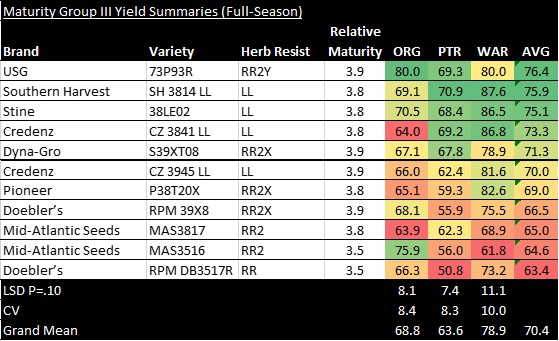
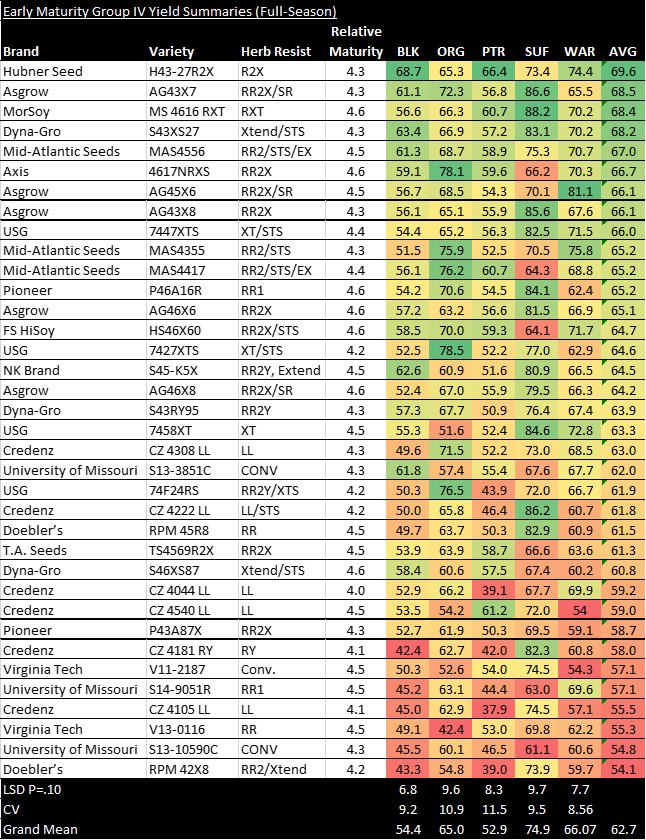
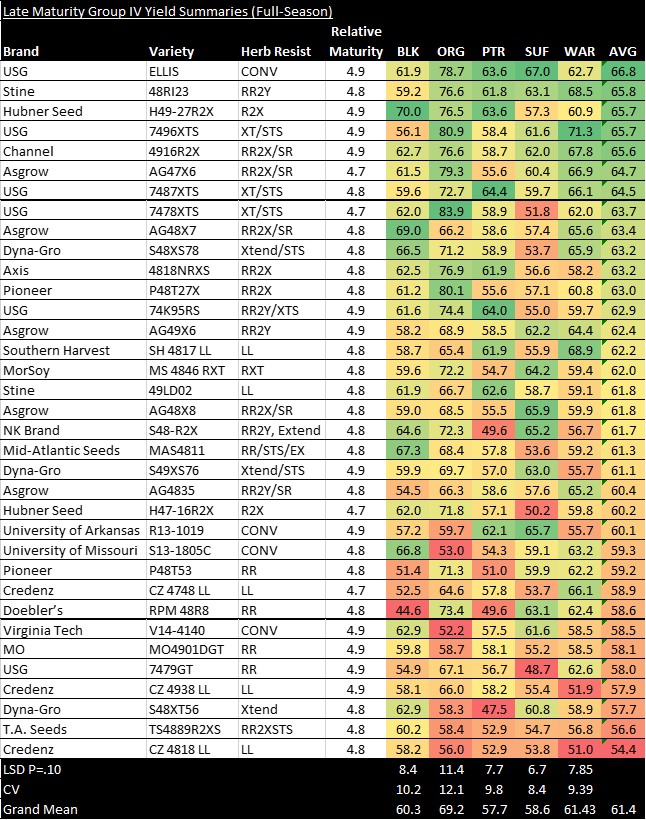
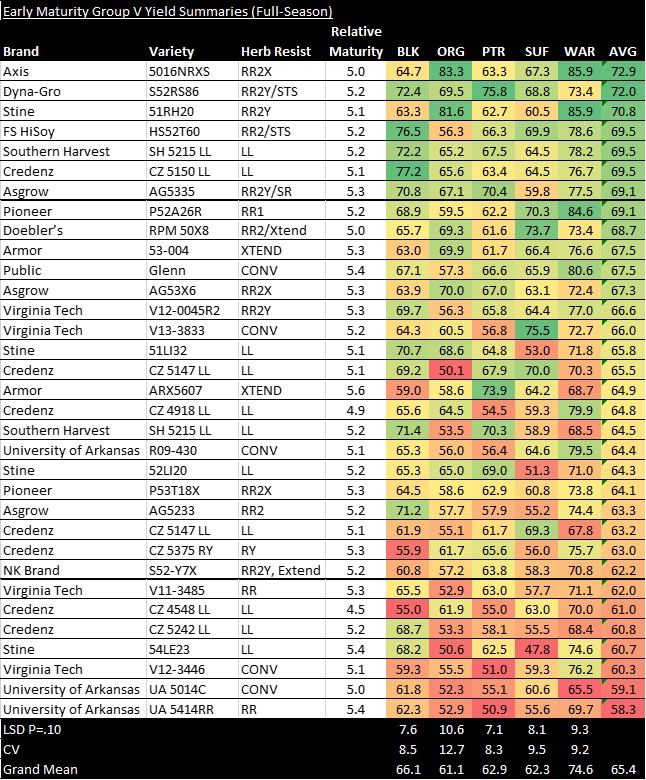
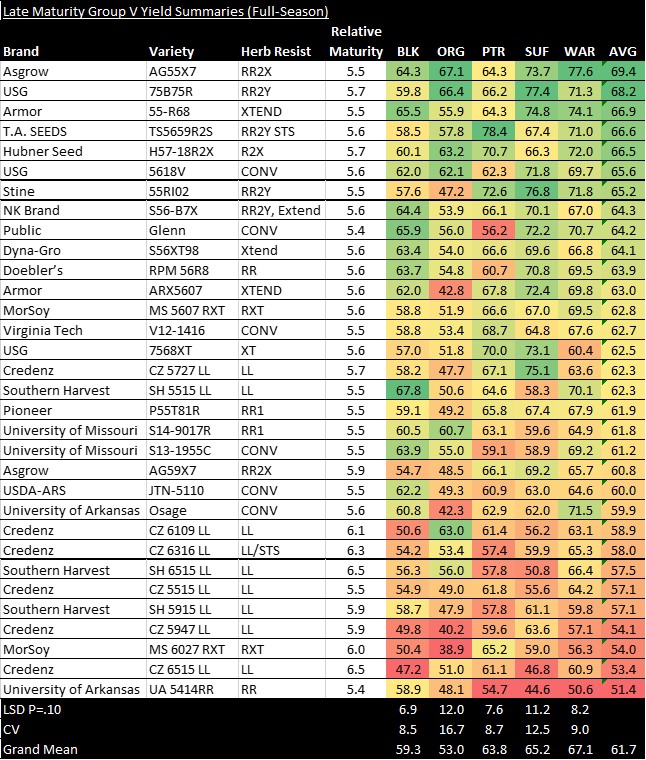
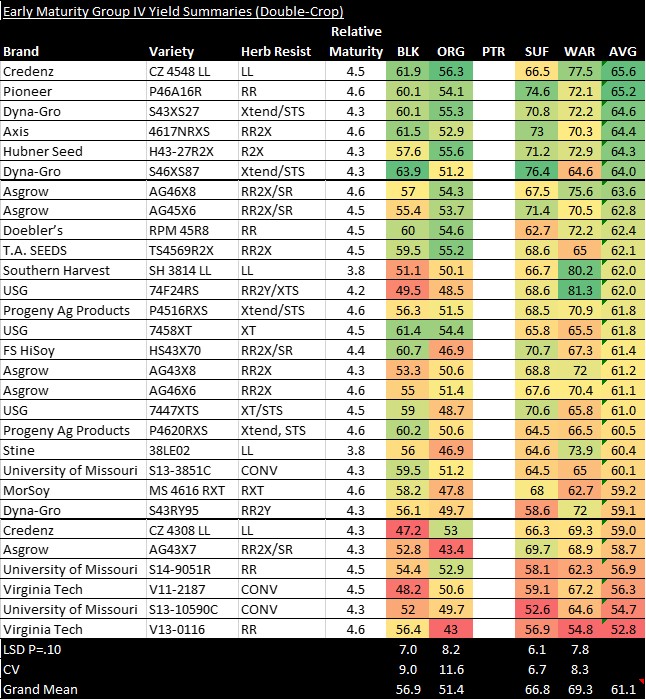
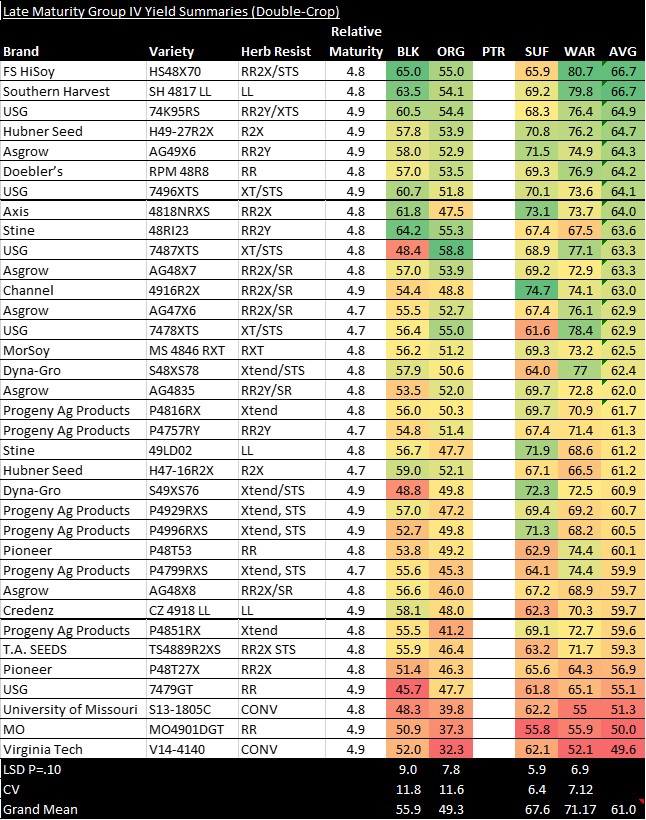
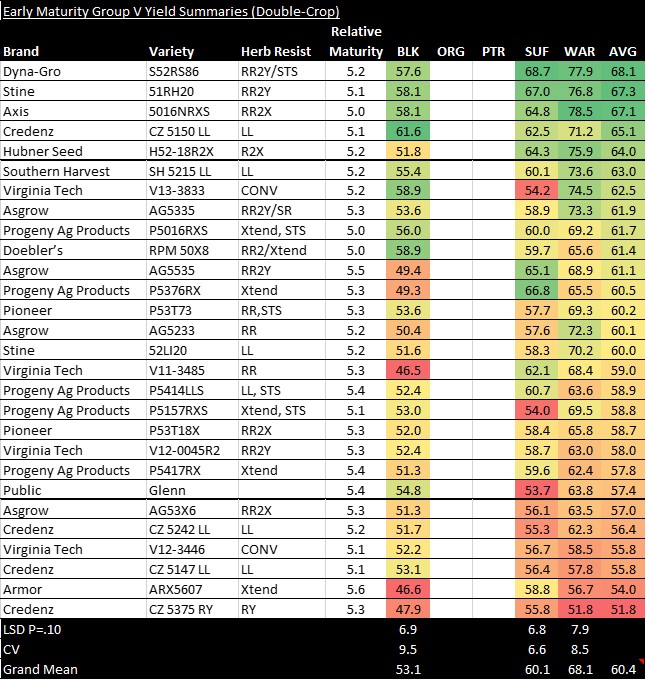
It was a challenging harvest season, but we harvested our last plot today.  Yields were very good, ranging from the upper 40’s to upper 70’s.  Across all maturity groups in our variety tests, full-season yields averaged 63.3 bushels/acre and double-crop averaged 60.0 bushels/acre.

Virginia soybean are now predicted to average 45 bushels/acre, a new state record.  We are just shy of the predicted national average.  Over the last 20 years, we have been increasing yields at a rate of 0.6 bushels/acre per year.  This is quite a feat!  While better genetics are part of this increase, I think that most of the increase is coming from better overall management of the crop.  This management includes long term (e.g., better soil quality, etc.) and short term (e.g., timely planting, etc.). 

Of course, we cannot forget the weather.  It was relatively cool during the critical pod and seed development stages.  More importantly, rain came at the right time.

2017 Virginia Soybean Variety Results

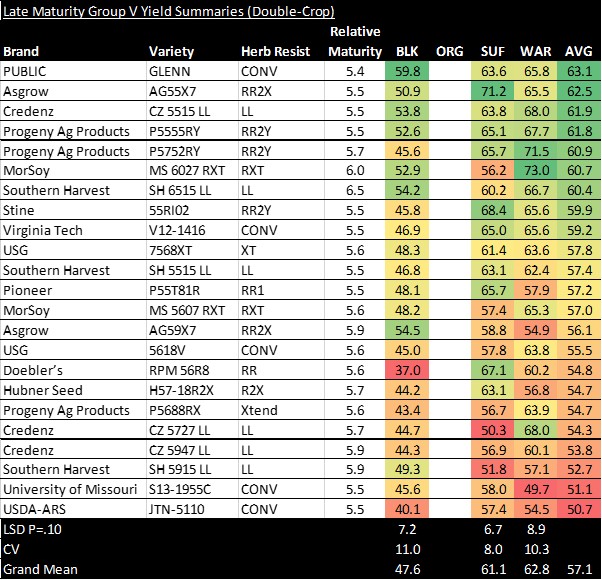
Below are some preliminary results to our soybean variety tests.  I caution you that these are preliminary – some changes could still be made.  But, I feel pretty good about the data presented here.  Some double-crop data from Orange and Painter is still outstanding due to variability.  We will be trying to determine its cause and have those data available ASAP.

Workhorses, Racehorses, and Quarter horses

Today is the first day in 2 weeks that we’ve been able to harvest due to weather and a combine breakdown.  So, we are not that much farther along in getting variety test data to you than we were last week.  However, I hope to get out some preliminary data by Thanksgiving.

Last week, I indicated that certain relative maturities do better in some parts of Virginia than others.  This week, I I’ll get a little more specific and discuss choosing the best variety for a given yield potential.

First and foremost, I will continue to emphasize that variety selection should be based on multi-year multi-site data.  Basing your selection on a single test (maybe closest to you) and single year is a recipe for failure.  However, I don’t necessarily recommend always choosing a variety based on average yields over site-years – although a very good place to start.  This may seem a little contradictory, but let me explain.

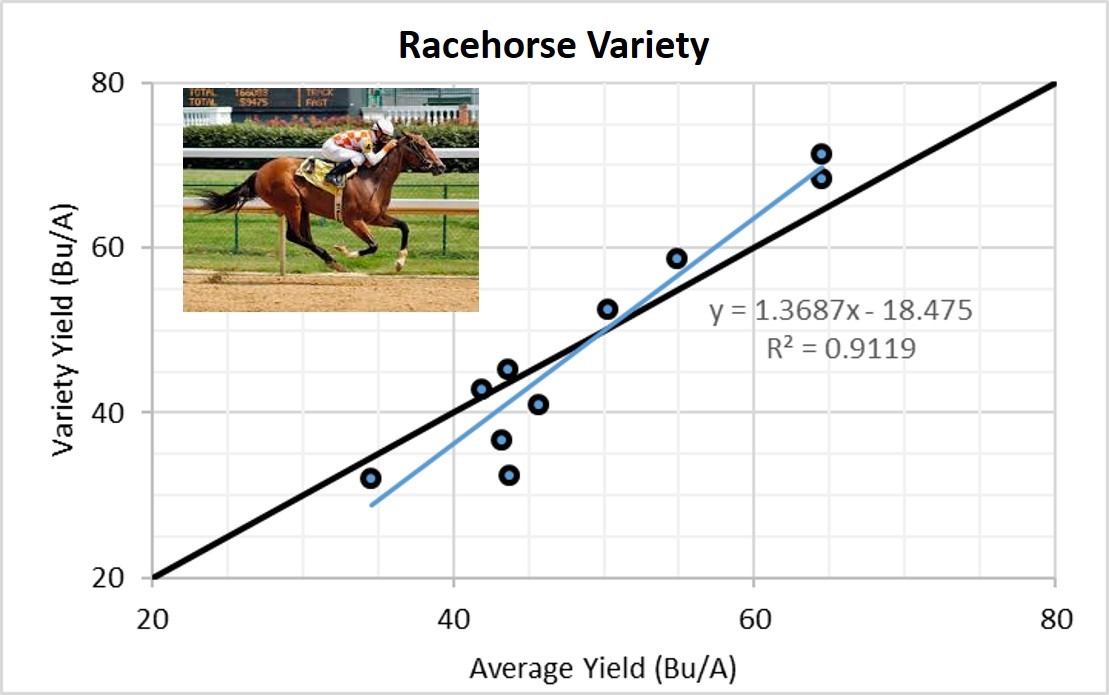
Certain varieties do better under high-yielding environments.  I like to call these “racehorse” varieties.  Choose such a variety if you want to win a yield contest.  Other varieties may yield more than others under stressful conditions.  I refer to these as “workhorses”.  And there are some that tend to do well, regardless of the yield potential – I’ll call these “quarter horses” (quarter horses can run very fast for short distances and you can still ride them long distances over quite rugged terrain).

Last year, we analyzed 5 years of variety test data and classified all varieties that we tested as one of the above.  Examples of our results are shown below. The graphs represent the yield of a single variety versus the yield of all varieties tested at that site and year.  Each symbol represents a different site-year.

To summarize, the vast majority of varieties are neither racehorses or workhorses; they perform equally in all yield environments.  So, averages will work just fine in most cases.  But, if you know you have a great- or poor yielding soil or if you are irrigating, then you may want to look into those varieties that fit that situation.

We have all of these data in an excel spreadsheet.  If interested, let me know; I’ll be happy to share upon request.

What’s the Best Soybean Maturity Group for your Farm

Yields are coming in from our variety tests – yields are good, not great, but good, ranging from the upper 40’s to low 70’s.  I hope to get a summary of the maturity group (MG) 3 and 4 tests out soon.  Be looking for them.

In the meantime, a questions that continues to arise if “What is the best maturity group for my farm?”  Or “What’s the best maturity group for my field?”  This is a very valid question.  Some years MG 4’s will shine and other years the MG 5’s are best.  Occasionally, MG 3 or 6 look good (the 6’s have been performing very well lately – as long as the frost holds off until mid-Nov!

An attempt was recently made (and published) to redrawn the MG lines in the U.S (Mourtzinis and Conley, 2017) – see the map to the upper right.  The researchers used variety test data from nearly all states to come up with the map shown.  While this map is more-or-less accurate when looking at the U.S. as a whole, it is not when you look closer (i.e., at individual states).

To better answer your questions regarding MG’s in Virginia, we took 10 years of our variety test data (around 15,000 plots) and began evaluating the probability of:

  1. a relative maturity (RM) yielding at least as high as the other RM’s tested at that location
  2. a RM yielding significantly higher than the other RM’s tested at that location.

Results are shown in the following graphs. Note that we split the results into full-season and double-crop soybean.  We have also divided each MG into early-, mid-, and late-RM’s.  The total bar height answers question 1 – the probability that the RM does at least as well at the others.  For instance, as expected, there is an 80 to 100% probability that MG 5’s will yield at least as much as other relative maturities in Blackstone (Southern Piedmont, droughty clay soils).

The hatched part of the bars answer question 2 – the probability that the RM yields significantly more that the other RM’s.  Using the Blackstone example, the 5’s yield significantly more than other MG’s 30 to 60% of the time.

Of course the “devil is in the details”.  There are soil properties and environmental conditions that control which RM is best in a given year.  If interested, contact me; I’ll give you my preliminary thoughts on that.  Rainfall is definitely the biggest influence – not how much we receive but when it falls; but that is random in Virginia.  There are other issues.


To summarize:

  • MG 3’s and 4’s are best suited for the most northern and western location (Orange).
  • MG 5’s perform best in our most southerly locations (Blackstone and Suffolk).  But, the late 4’s can make a strong showing in some years, especially at Suffolk (I think I know why; its not just when the rain fell. Contact me.)
  • Both MG 4’s and 5’s perform well at Warsaw (we can’t explain the full-season late-4 results, yet).  Note that yield potential of the later 5’s decline with double-crop plantings at this northerly, but Coastal Plain site (probably frost damage).
  • All MG 4’s (early, mid, and late) perform best when planted in May at our Eastern Shore location (Painter).  There are curious things happening here (while not that far south, its our most easterly and probably the most consistently favorable environment for growing soybean).  Note that early- and mid-4’s are no better than 5’s when planted double-crop.

1st Attempt at a Relative Maturity Map in Virginia

I’ve made an attempt at drawing a Virginia map.  But do not read too much into this!  This is based only on 5 locations (although 10 site-years and thousands of plots at each location) and the “devils in the detail”.  An I did not use GIS to draw this map (the lines are not 100% accurately located).

Do not assume that I want you to plant only these RM in these areas, only that these tend to do best in most years.

How do you use these data?  Make most of your chosen varieties fit these results.  However, allocate a smaller acreage to those RM’s that can occasionally break records.

On a closing note, these data also indicate that early RM’s do better on our best, most productive land.  But, that’s a topic for next week.

Update on the Boxwood Blight Situation in Virginia and Recommendations for Minimizing Disease Introduction and Spread from the Virginia Boxwood Blight Task Force

Current situation in Virginia, 10/6/17

According to records of the Virginia Boxwood Blight Task Force, to date boxwood blight has been diagnosed in over 70 locations and approximately 30 counties in Virginia. There are likely additional undocumented incidences of the disease, for example, if no sample was submitted for diagnosis through Virginia Cooperative Extension or the Virginia Department of Agriculture and Consumer Services.

Although boxwood blight has been diagnosed in many counties in Virginia, there is no indication that it is widespread throughout any Virginia county. This is not unexpected, based on the current understanding of the biology of the boxwood blight pathogen. Boxwood blight is typically initially introduced into a new location on infected boxwood or other susceptible plants (e.g. pachysandra and sweet box). Holiday greenery containing infected boxwood can also introduce the disease into a new location. However, boxwood blight is not spread long-distance via wind currents. Therefore, one need not panic even if the disease has been found in one’s county. However, if the disease has been identified in one’s neighborhood, then there is a heightened risk of local spread of the disease.

After the initial introduction of boxwood blight-infected boxwood (or pachysandra or sweet box) into a location, neighborhood boxwood plantings are at risk for boxwood blight. There are a number of means by which the sticky spores of the fungal pathogen can move through a neighborhood. For example, they can be spread via contaminated pruning tools, spray hoses, equipment, vehicles, clothing, shoes, or infested leaves spread by leaf blowers. Wildlife (including birds), insects, domestic animals or humans that have been in contact with the spores may also move the infective spores through a neighborhood. Movement of the pathogen by many of these means has been documented in locations in Virginia.

To safeguard Virginia boxwood plantings and production, we call for community awareness and efforts to avoid accidental introduction of boxwood blight into new locations and prevent local spread of boxwood blight:

Specifically, we recommend and stress the following:

  • Purchase boxwood, pachysandra and sweet box only from a nursery that is listed as a member of the Boxwood Blight Cleanliness Programand/or from a retailer who sells only boxwood produced by nurseries in the Boxwood Blight Cleanliness Program.
  • If boxwood blight is suspected, immediately contact your local Extension office, which can submit a sample for confirmatory diagnosis. Where boxwood blight is confirmed, it is strongly recommended to immediately remove and double bag all diseased plants and fallen leaves as well as contaminated soil underneath the planting. The bagged waste should be removed to a designated landfill to mitigate disease spread to other boxwood in the landscape and other properties nearby.
  • Employ only landscape professionals who are aware of how boxwood blight spreads, since boxwood blight can be introduced to properties through landscape maintenance activities. The fungal spores and fallen diseased leaves can be moved on tools, boots, tarps, hoses, clothing and vehicles. Landscape professionals should have a stringent sanitation plan in place to decontaminate tools, equipment, vehicles, clothing, shoes, etc. between landscape locations and other practices that minimize the chance to move the disease through landscaping activities.
  • Adhere to best management practices outlined for boxwood blight, which are detailed in PDFs available at the Virginia Boxwood Blight Task Force website.

Additional Precautions for Landscape Professionals:

  • Landscape professionals are strongly advised to walk through a site before beginning work. This is to identify any potential boxwood blight problems and/or risks. We have heard anecdotal reports from landscape professionals of both serious equipment contamination issues and spread of the disease by unexpected encounters of the disease in a landscape.
  • Landscape contractors should at all times be equipped with a sanitation “kit” for disinfesting tools and equipment and take precautions to avoid moving spores on clothing, boots, hoses, vehicles, etc. Specific recommendations for effective sanitation methods are detailed on the Virginia Boxwood Blight Task Force website (under the “Sanitizers” tab).
  • Landscape companies should ensure their staff are familiar with the symptoms of boxwood blight so that they can recognize the disease in the landscape. Laminated wallet cards with images of symptoms of boxwood blight and information on the Virginia Boxwood Blight Task Force website are available through your local Virginia Cooperative Extension

Resources: the Virginia Boxwood Blight Task Force website and Best Management Practices

Refer to the Virginia Boxwood Blight Task Force website for further information on boxwood blight. We recommend that you familiarize yourself with the appropriate Best Management Practice (BMP) for your situation. The BMPs are available on the website as PDFs.

Black light trap report for Sep. 28, 2017

Average nightly black light trap catches of corn earworm moths this week were: Southampton=0.3; Prince George (Templeton)=6; Prince George (Disputanta)=4; Hanover=2; Suffolk=26. Here is the data table: BLT_28_Sep_2017

Most traps are being stowed now. We greatly appreciate the reports this season from Watson Lawrence (Chesapeake); Mike Parrish and Angela Duncan (Dinwiddie); Laura Maxey-Nay (Hanover); Scott Reiter (Prince George); Mary Beahm (Warsaw); LIvvy Preisser (Southampton); and Sally Taylor and her entomology team (Suffolk). We also want to thank the growers who hosted the traps on their farms.