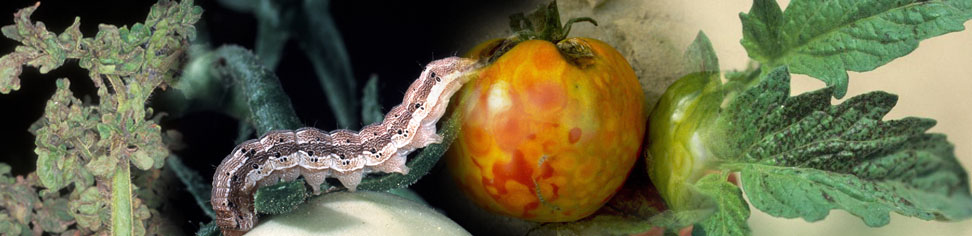
The year’s first Virginia Potato Disease Advisory (by Dr. Steve Rideout), is attached as a pdf article: VPDAApril252017

Wheat Disease Update – April 20, 2017
Wheat is beginning to flower throughout Virginia, so it is time to make decisions about fungicide applications for both Fusarium head blight (FHB, also known as scab) and to protect the flag leaf as the grains begin to form. Currently, the risk for FHB is low in most parts of Virginia, even for susceptible varieties. The FHB Risk Assessment Tool can be found at http://www.wheatscab.psu.edu. Keep in mind that this is a prediction tool and it will not predict FHB outbreaks 100% of the time. A current screen shot of the website is shown below. Rains are expected over the weekend, but dry weather over the past several weeks has not favored spore production by the FHB fungus, so risk of FHB infection is expected to remain low for wheat that is flowering over the next week. However, now may still be the time to apply fungicides for foliar diseases including stripe rust, powdery mildew, and leaf blotch. The flag leaf must be protected during grain development to maximize yields. Again, due to the dry weather some areas have very little disease, and scouting is still recommended prior to making a fungicide application. However, there have been numerous reports throughout the region of outbreaks of stripe rust (especially on Shirley) and powdery mildew. Do NOT apply a strobilurin or fungicide pre-mix containing a strobilurin after flag leaf emergence (Feekes 9) since this can increase DON contamination in the grain. Prosaro, Caramba, and Proline are the most effective products for reducing scab and DON contamination, and these fungicides will also control foliar diseases such as leaf blotch, stripe and leaf rust, and powdery mildew. A fungicide efficacy table for wheat can be found in a previous post.
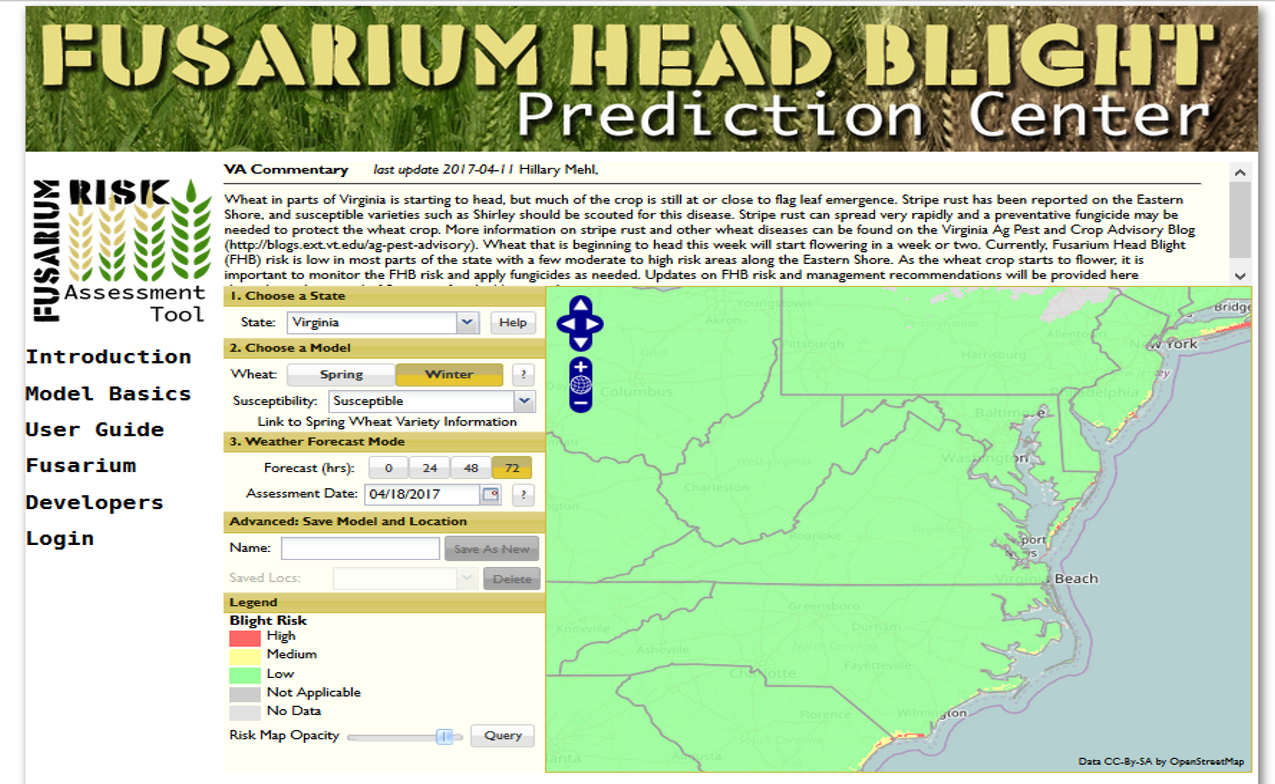
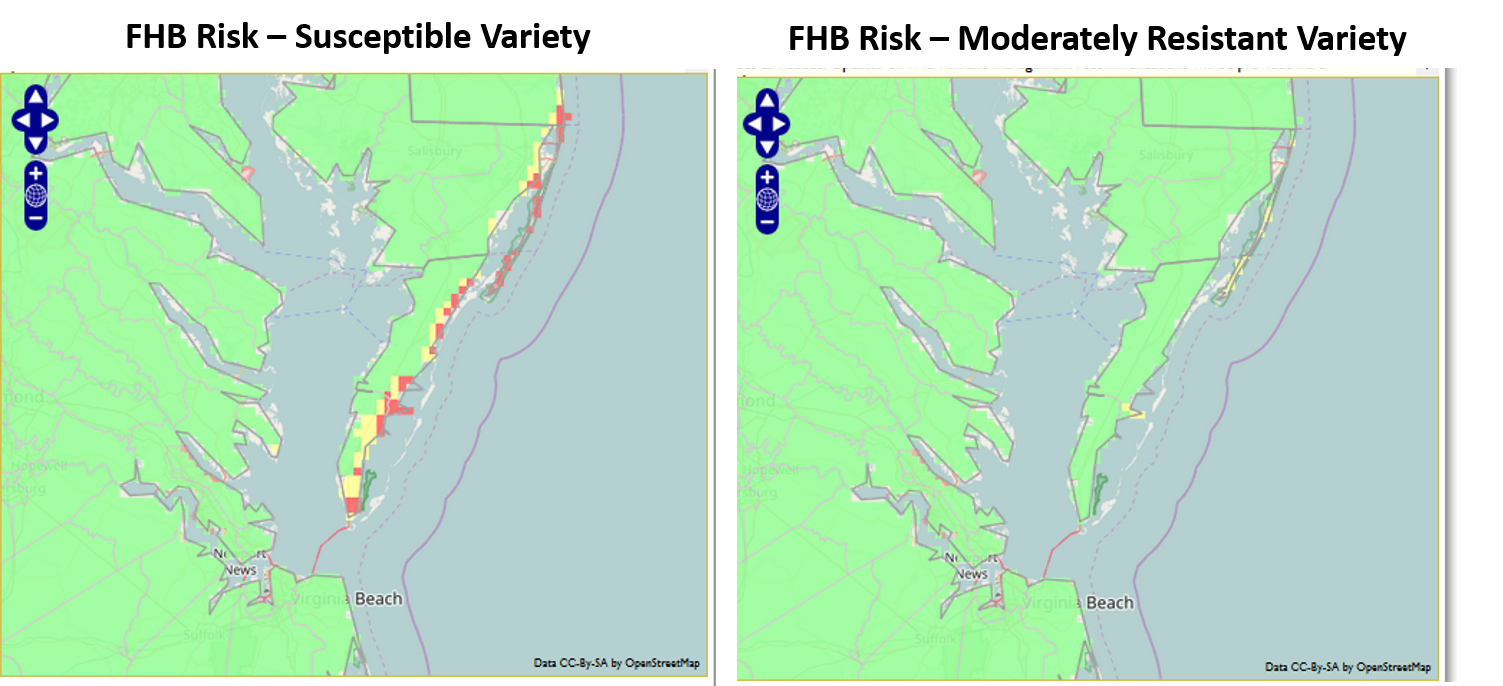 Screen shots from the Fusarium Head Blight Risk Assessment Tool (http://www.wheatscab.psu.edu) on April 20, 2017. Currently, risk of FHB infection in wheat that is flowering is low in most parts of Virginia. The exception is along the Eastern Shore where conditions are typically more humid and favorable for spore production by the FHB fungus. For susceptible varieties such as Shirley, FHB risk is moderate to high in some areas. However, for moderately resistant varieties such as Hilliard, the risk is currently low. This illustrates the importance of variety selection in management of FHB and DON contamination in wheat.
Wheat Disease Identification Guide
Copies of a Wheat Disease Identification Guide from Kansas State are now available and can be requested from Dr. Hillary Mehl at the Tidewater AREC (hlmehl@vt.edu). A PDF version of the guide can be downloaded here. Though not specific to Virginia, many of the diseases included in the guide occur in our region and detailed descriptions of symptoms and management recommendations are included. As always, if confirmation of a disease is needed for wheat or other agronomic crops, plant samples can be submitted to the Virginia Tech Tidewater AREC (6321 Holland Rd. Suffolk, VA 23437). When submitting samples, be sure to fill out the Plant Disease Diagnostic Form with as much information as possible as this will assist us with an accurate diagnosis. The form can be downloaded here: Plant Disease Diagnostic Form
Wheat Disease Update – April 11, 2017
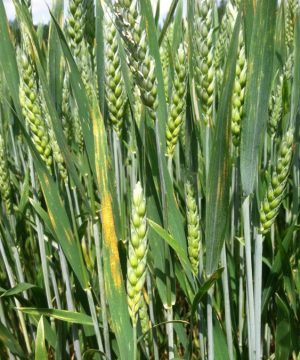
Though it is still a little early to be making scab fungicide applications, it is time to start thinking about if and when to apply a fungicide to the wheat crop. Wheat in parts of Virginia is starting to head, but much of the crop is still at or close to flag leaf emergence. Stripe rust was observed this week in Warsaw, VA and has been confirmed on the Eastern Shore of Virginia and in southeastern Delaware. Stripe rust is likely widespread in the state, and susceptible varieties such as Shirley should be scouted for this disease. Stripe rust can spread very rapidly and a preventative fungicide may be needed to protect the wheat crop. More information on stripe rust and other wheat diseases can be found in a previous post. Wheat that is beginning to head this week will start flowering in a week or two. Currently, Fusarium Head Blight (FHB) risk is low in most parts of the state with a few moderate to high risk areas along the Eastern Shore. As the wheat crop starts to flower, it is important to monitor the FHB risk and apply fungicides as needed. Updates on FHB risk and management recommendations will be provided here and from the FHB Alert system throughout the period of flowering for the Virginia wheat crop. You can sign up for FHB text message and/or email alerts here. Also be sure to check the FHB Risk Tool (http://www.wheatscab.psu.edu/) as the wheat crop starts to flower. If FHB risk is moderate to high, an application of a fungicide (e.g. Prosaro, Caramba) may be needed to protect the crop from scab and DON contamination. An update fungicide efficacy table for wheat can be downloaded here:
Section 18 authorized for Transform WG for control of sugarcane aphid on sorghum in Virginia
In accordance with Section 18 of the Federal Insecticide, Fungicide, and Rodenticide Act, the EPA has authorized the Emergency Exemption use of Transform WG (active ingredient = sulfoxaflor) to be used on sorghum to control sugarcane aphid (Melanaphis sacchari) in specified Virginia counties. The authorization will expire November 30, 2017. Foliar applications may be made at 0.75-1.5 oz/acre, with a maximum of 2 applications per acre per year. Please refer to the product’s Section 18 registration for further information, including application directions (at the time of this writing, the 2016 version of the Section 18 is the one available on cdms.net [the 2016 version expires on April 8]). Micah Raub and others with the Virginia Department of Agriculture and Consumer Services are acknowledged for their assistance.
Stripe Rust Confirmed in Wheat on the Eastern Shore of Virginia
On Friday, stripe rust was confirmed on a wheat sample from a field in Northampton County, Virginia. Steve Rideout, Extension Plant Pathologist at the Eastern Shore AREC, reported that infection is fairly severe and rainy conditions will favor the pathogen’s development. This is an early sighting for this disease and constitutes a serious threat to our wheat crop. The disease was found on Shirley, which based on observations in previous years in known to be highly susceptible to stripe rut. A previous post with management recommendations including variety susceptibility ratings and a fungicide efficacy table for stripe rust and other wheat diseases can be found here:
https://agpestadvisoryvaes.wp.prod.es.cloud.vt.edu/stripe-rust-found-in-north-carolina-wheat/
You should be scouting your wheat crop at this time, and if stripe rust is found on a susceptible variety, a fungicide application is recommended. If you have any questions or need assistance identifying diseases on your wheat crop, contact Dr. Hillary Mehl at the Tidewater AREC (hlmehl@vt.edu).
EPA decision on chlorpyrifos
The head of the EPA, Scott Pruitt, signed an order last night denying the petition to ban chlorpyrifos (Lorsban). This decision will allow peanut growers in our area the continued use of this insecticide for the foreseeable future, perhaps until 2022 when the EPA is required to reevaluate safety of this product. The environmental group that filed the 2007 petition to ban chlorpyrifos has announced its plans to appeal the decision. More information can be found here – https://www.epa.gov/newsreleases/epa-administrator-pruitt-denies-petition-ban-widely-used-pesticide-0
Warm weather and grain bin insects
Our recent warm weather has done more than wake up your plants – it has signaled to many insects that it is time to start feeding and reproducing. Prompted by a call from ANR agent Mike Parrish in Dinwiddie County, I spoke today with Kathy Flanders at University of Auburn about her recommendations to mitigate insect injury in store grain. Her #1 suggestion – turn on those fans! Your goal should be to keep the temperature inside your bin below 60 degrees. Make sure and leave equipment running long enough to cool the entire structure. If you are unable to keep temperatures below this threshold, or if our nights do not stay cool, make sure to take samples regularly to scout for insect injury. Consult this guide for management recommendations specific to the Southeast: http://www.aces.edu/pubs/docs/I/IPM-0330/IPM-0330.pdf.
Scout now for marestail/horseweed
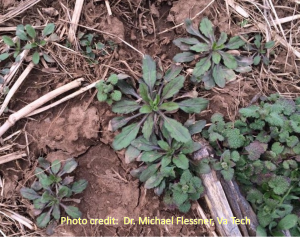
Recent mild temperatures and the mild winter are setting the stage for rapid development of marestail/horseweed (Conyza canadensis) this spring. Marestail was particularly troublesome last year in soybeans. Marestail can germinate in both the fall and the spring. It is more likely to overwinter in the rosette stage during mild winters. If you wait until your typical burndown the marestail may start bolting and therefore be more difficult to control. Adding to this difficulty, many marestail populations are resistant to Roundup (and other glyphosate containing products). You should scout your fields targeted for soybeans now to identify overwintering marestail. Marestail control can be achieved with 2,4-D or dicamba now and still offer plenty of time to avoid plant back restrictions (up to 15 days for 2,4-D or up to 28 days for dicamba). Glyphosate resistant weeds and the difficulty in controlling more mature weeds underscore the need to scout fields earlier and use some alternative herbicides in your program. Always consult the product label for specific instructions.
“Soil Management/Soil Fertility Seminars for Row Crops” meeting on March 16, 2017
We hope that you will be able to attend the meeting, “Soil Management/Soil Fertility Seminars for Row Crops” on March 16, 2017, from 9:00 AM – 12:00 PM at the Virginia Tech Tidewater AREC, 6321 Holland Rd, Suffolk, VA 23437. Here is the agenda:
9:00 AM – Introduction and Opening Comments, Dr. Hunter Frame
9:00 AM – 9:45 AM – Benefits of Conservation Tillage Systems/Introducing Cover Crops, Dr. Mark Reiter
9:45 AM – 10:30 AM – Nitrogen and Sulfur Management in Cotton Production, Dr. Hunter Frame
10:30 AM – 10:35 AM – Break
10:35 AM – 11:05AM – Nitrogen Management in Corn and Winter Wheat Production, Dr. Mark Reiter
11:05 AM – 11:35 AM – Potassium Fertilization Requirement for Full Season and Double-Crop Soybeans, Dr. David Holshouser
11:35 AM – 12:00 PM – Potassium Nutrition of Cotton in Virginia: A look at Timing, Rate, and Source, Dr. Hunter Frame