Sugarcane aphid update for July 14, 2016

Our team has been scouting sorghum for sugarcane aphid in Isle of Wight, Southampton, Suffolk, and Sussex counties, but we have not detected them yet this season.  They have been found in North Carolina, and with their ability to spread and reproduce rapidly, we recommend starting to scout sorghum for this pest.

There are several aphid species that can be found in sorghum, but sugarcane aphids are cream yellow in color with two, short dark cornicles (“tailpipes”) on their hind end.  Start weekly scouting at the field edges, especially checking the underside of lower leaves.  Once insects are found, scouting should be conducted at shorter intervals to actively monitor population growth.  Dr. Dominic Reisig, Extension Entomologist at North Carolina State University, provides these thresholds for sugarcane aphid.

When pesticides are needed, we recommend Sivanto (which has a FIFRA Section 2(ee) Recommendation for a reduced rate of 4-7 oz/A, including Virginia), or Transform WG (which is registered under a Section 18 emergency exemption for Virginia at a rate of 0.75-1.5 oz/A). Good coverage is essential.  Please refer to (and follow!) the labels for more details, including the maximum amount that can be applied annually, pre-harvest intervals, etc.  Repeat applications, when needed, should rotate active ingredients.   Pyrethroids are not recommended.
Link

Initial results from the 2016 Virginia state wheat and barley tests are available in excel format at:

www.grains.cses.vt.edu

The full document and summary is coming soon.


Corn earworm update for July 7, 2016

Our black light trap at the Tidewater AREC in Suffolk is just now beginning to catch low numbers of corn earworm moths–we had 4 total this past week.  The Eastern Virginia AREC in Warsaw is not catching them yet.

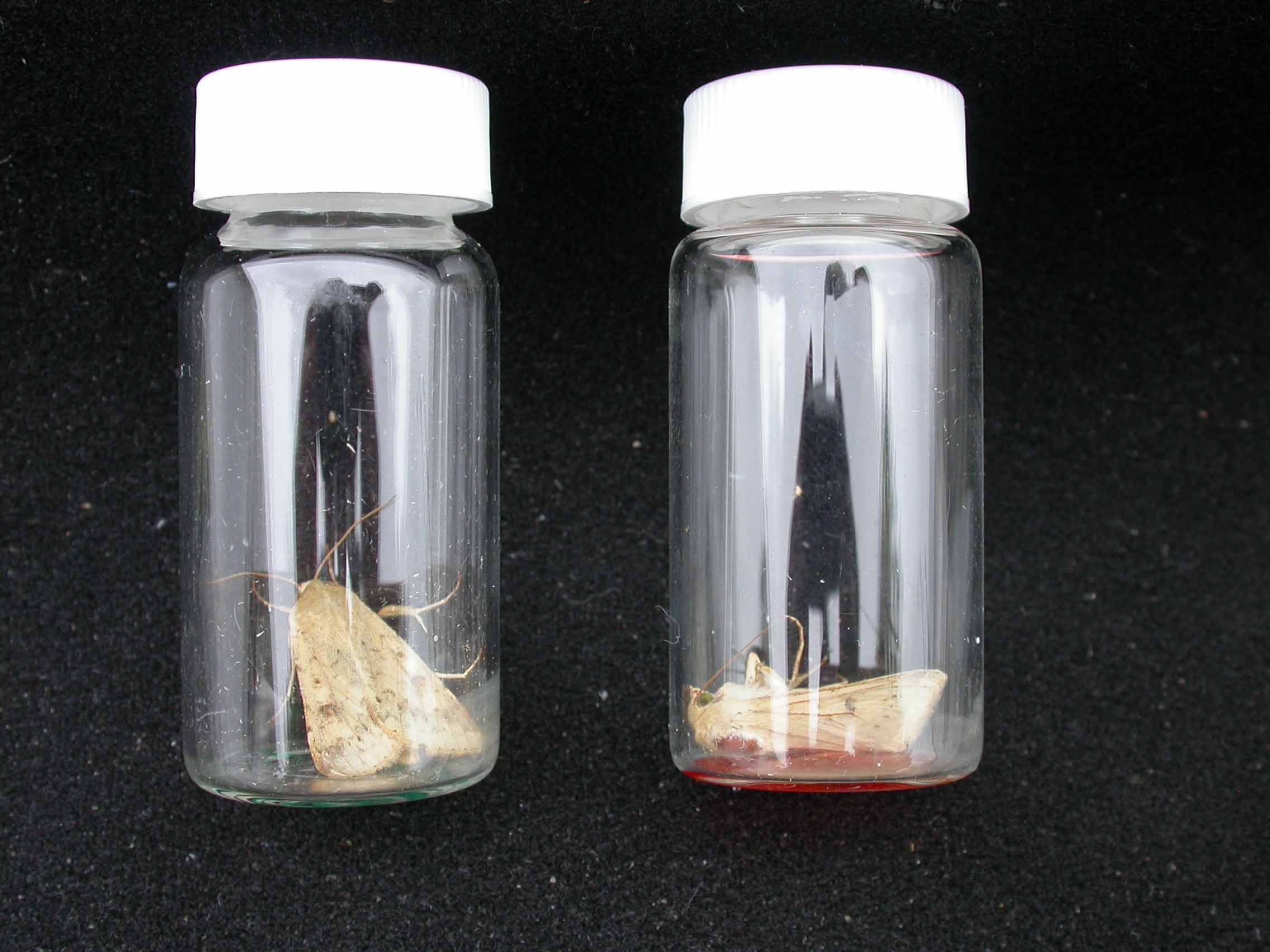
We have caught some corn earworm moths in our pheromone traps in Suffolk (pheromone traps often out-perform black light traps early in the season for this species).  We have conducted vial tests on 160 moths since late June, and have seen quite high levels of survival for the start of the season (an overall average of 38.6% of moths surviving the vial test).  As in the past, we are exposing these moths for 24 hours to vials treated with a standard pyrethroid insecticide, cypermethrin, at 5 micrograms per vial.  For comparison, in 2015 we had about 21% survival at this time of the season, with  a peak survival rate of 51% occurring in late August.  We will continue to provide updates on this issue.

Corn earworm moths in the cypermethrin vial test

Corn earworm moths in the cypermethrin vial test

LATE BLIGHT IN VIRGINIA

Late blight was found in Accomack County, VA yesterday on potato. Growers on the Eastern Shore and other areas of the Commonwealth should scout their fields and take preventative measures. Please let us know if you have any questions. For more information on this potentially devastating disease of potato and tomato visit: https://pubs.ext.vt.edu/ANR/ANR-6/ANR-6_pdf.pdf

IMG_4227

Do we need to bump up our soybean seeding rates?

It’s hard to believe, but June is here and we need to start thinking about increasing our soybean seeding rates.  I’ve been recommending only 100 to 115 thousand seeds per acre for full-season production, enough to give you 70 to 80 thousand plants – yes, that’s all you need to maximize yield.

But as the season gets shorter, yields will start falling with delays in planting date.  On average, we lose about 1/2 bushel/acre per every day we delay planting after the middle of June.  The graph below shows the results of last year’s 4-state early wheat harvest/soybean planting double-crop study.  Note that yield does not decline very much during the first week or two of June, but rapidly drops off afterwards.

2015 DC Soy Yield across Plant DateThe main reason for this yield decline is that the crop struggles to develop enough leaf area to capture 90-95% of the sunlight by early pod development, due to the shorter growing season.  We can alleviate some of this by narrowing rows and increasing seeding rate.

I usually suggest that farmers plant enough seed to result in a final plant population of 180,000 plants/acre for double-crop soybean.  That means planting 200,000 to 220,000 seed/acre.  Yes that is a lot of seed, but my research shows that yields (and profit) continue to increase up to this seeding rate, especially when planting is delayed until late-June and early-July.

There are stipulations.  More productive soils and irrigated soybean usually require less seed.  Good years that allow lots of quick growth require less seed (but who can predict a good year?).  Later maturity groups may require slightly less seed.  Less seed are needed as you move south (growing season is longer and you can plant a later relative maturity).  I think that a soil profile that is full of water at soybean planting (this year) might allow less seed to be planted – but I have not documented that – It just makes sense to me that plants will grow better when the small grain has not depleted most of the subsoil moisture.

What about now?  How many seed/acre do we need to plant in the first week of June?  Here are my suggestions.  Keep in mind that these are general guidelines; you need a gradual increase in seed/acre.  I’m assuming 80 to 85% emergence for June/July plantings.  To easily determine how many seed you need per row foot, see VCE pub 3006-1447, Suggested Soybean Seeding Rates for Virginia

May: 100 to 115K

June 1-7:  120-140K

June 8-14: 140-180K

June 15-21: 180-200K

June 22-30: 200-220K

July: 220-250K

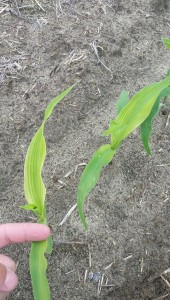
Yellow Corn

We are seeing yellow and stunted corn around Virginia duYellow Corn Plante to many different factors that range from nutrient deficiencies to cool and wet growing conditions. Take a look at this article to give you a few reasons for this poor looking corn and different things to consider prior to making your sidedress nitrogen applications. Yellow_Corn_26May2016
 

Stink bugs already in small grain and field corn

Our overall mild winter and wet spring are the kinds of conditions that favor survivorship and early development of stink bug populations. Because of these conditions, this could be a summer when we see higher than normal stink bug infestations in a lot of crops including field corn, cotton and soybean. Brown stink bugs are already being found in small grain fields and areas of North Carolina are reporting pretty heavy stink bug pressure on seedling field corn.  See this article by Dr. Dominic Reisig at the NCSU station on Plymouth for details https://entomology.ces.ncsu.edu/2016/05/how-to-avoid-a-stink-bug-disaster-in-corn-2/

We need to be thinking ‘stink bugs’ this summer and aligning our field scouting, sampling and threshold efforts in that direction as the summer progresses—and that applies to cotton and soybean fields as they mature.

True armyworm infestation reported in small grain on Eastern Shore

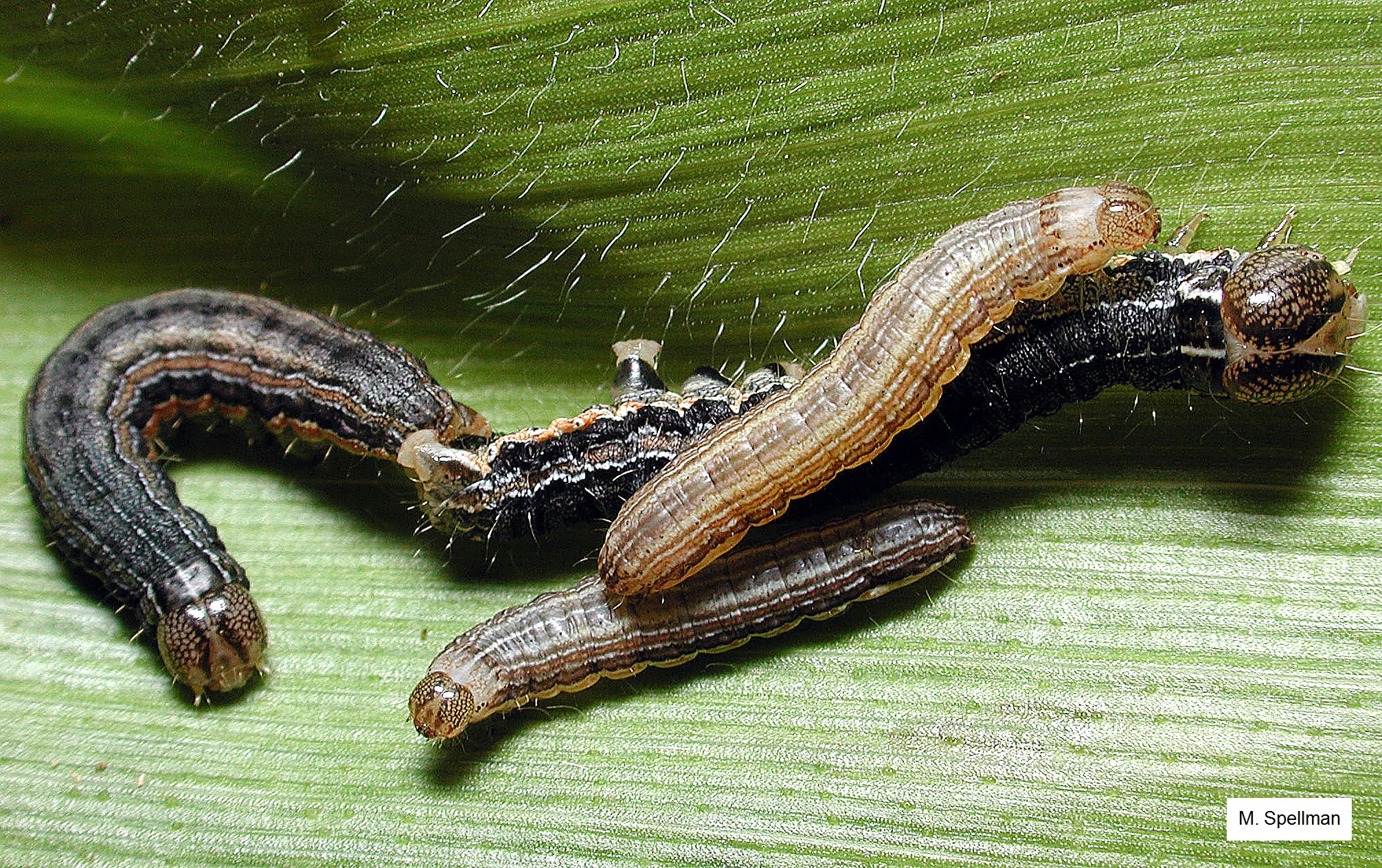
It’s been many years since we’ve seen a true armyworm (see the attached image) infestation in our small grain crop, but one is reported to be ongoing in the barley and wheat fields on the Eastern Shore. These caterpillars can do two types of damage—leaf feeding and head cutting.  Leaf feeding is rarely extensive enough to warrant control, especially if fields are within a couple of weeks of harvest.  Head cutting is less tolerable.  For some reason no one has been able to explain, caterpillars will sometimes eat through the stem below the heads casing them to drop to the ground.  Finding otherwise healthy looking heads-short stems on the ground is a good indicator that true armyworms are present and still active.  It is often hard to find them on plants during the day as they typically feed more at night and seek cover under plant residue during the day.  When we have worked with this pest, we found that fields with the most plant residue on the soil surface tended to have the heaviest infestations.

We do have thresholds for true armyworm for those motivated to scout for them. As a general rule, barley should be treated if the number of armyworms exceeds one per linear foot between rows and most of the worms are greater than 0.75-inch long. In wheat, armyworms tend to nibble on the tips of kernels rather than clip heads; thus, populations of two to three worms per linear foot between rows are required to justify control. In high management wheat fields with 4-inch rows, treatment is recommended when armyworm levels exceed 3 to 5 per square foot of surface area, or per linear foot of row.

If a treatment is warranted, there are a few good choices but the PHI (Pre Harvest Interval) may be a challenge. Some work we did many years ago showed that pyrethroids were generally effective but have a PHI of 14 days (example, Mustang Max) to 30 days (example, Baythroid), which could be a problem for barley, wheat not so much. Lannate has a PHI of 7 days but did only an OK job in our trial and not as good as the pyrethroids. We chalked that up to the fact that although Lannate has great efficacy against most caterpillar species, it has almost zero residual activity. So a day-time spray may not have had as much horsepower by the evening when caterpillars become active. Since our work was done, several new products have been introduced to the market that we have not tested, like Prevathon (PHI 14 days), and Besiege (PHI 30 days). These should work well. See the Pest Management Guide Field Crops 2016, 4-49, p. 53 for more product listings (http://www.pubs.ext.vt.edu/456/456-016/Section04-Insects-1.pdf).

With any treatment, coverage will be essential so deliver the highest volume you can live with and direct it to go as deep into the canopy as possible.

TAW_larvae

Section 18 granted for use of Transform to control sugarcane aphid on sorghum

EPA just granted a Section 18 for use of Transform™ WG in Virginia against sugarcane aphid in sorghum. Transform (50% a.i. sulfoxaflor), manufactured by Dow AgroSciences, may be applied through April 8, 2017 on a maximum of 16,591 acres of sorghum fields (grain and forage) in the following counties: Accomack, Albemarle, Alleghany, Amelia, Appomattox, Augusta, Bedford , Botetourt, Brunswick , Campbell, Caroline, Carroll, Charlotte, Charles City, Culpeper, Cumberland, Dinwiddie , Essex, Fauquier, Floyd, Fluvanna , Franklin, Frederick, Gloucester, Goochland, Greensville, Halifax, Hanover , Henrico, Isle of Wright, George , King William, King and queen , Loudon, Louisa, Luneburg, Madison , Mathews, Mecklenburg, New Kent, George , Prince William, Rockbridge , Rockingham , Russell, Southampton, Spotsylvania, Suffolk, Surry, Sussex, Virginia Beach, Washington, Westmoreland, and Wythe. 

The following directions, restrictions, and precautions must be observed. Foliar applications may be made by ground or air at a rate of 0.75-1.5 oz of product (0.023-0.047 lb a.i.) per acre. A maximum of 2 applications may be made per year, at least 14 days apart, resulting in a seasonal maximum application rate of 3.0 oz of product (0.09 lb a.i.) per acre per year. Do not apply product 3 days pre-bloom or until after seed set. 

To minimize spray drift and potential exposure of bees when foraging on plants adjacent to treated fields: applications are prohibited above wind speeds of 10 miles per hour (mph) and must be made with medium to course spray nozzles (i.e., with median droplet size of 341 µm or greater). A restricted entry interval (REI) of 24 hours applies to all applications. Do not apply within 14 days of grain or straw harvest or within 7 days of grazing, or forage, fodder, or hay harvest. 

Environmental Hazards Statement: “This product is highly toxic to bees exposed through contact during spraying and while spray droplets are still wet. This product may be toxic to bees exposed to treated foliage for up to 3 hours following application. Toxicity is reduced when spray droplets are dry. Risks to pollinators from contact with pesticide spray or residues can be minimized when applications are made before 7:00 am or after 7:00 pm local time or when the temperature is below 55 degrees Fahrenheit (°F) at the site of application.” 

We will provide updates on the presence and spread of sugarcane aphid as the season progresses.