It’s Time to Start Increasing Soybean Seeding Rates

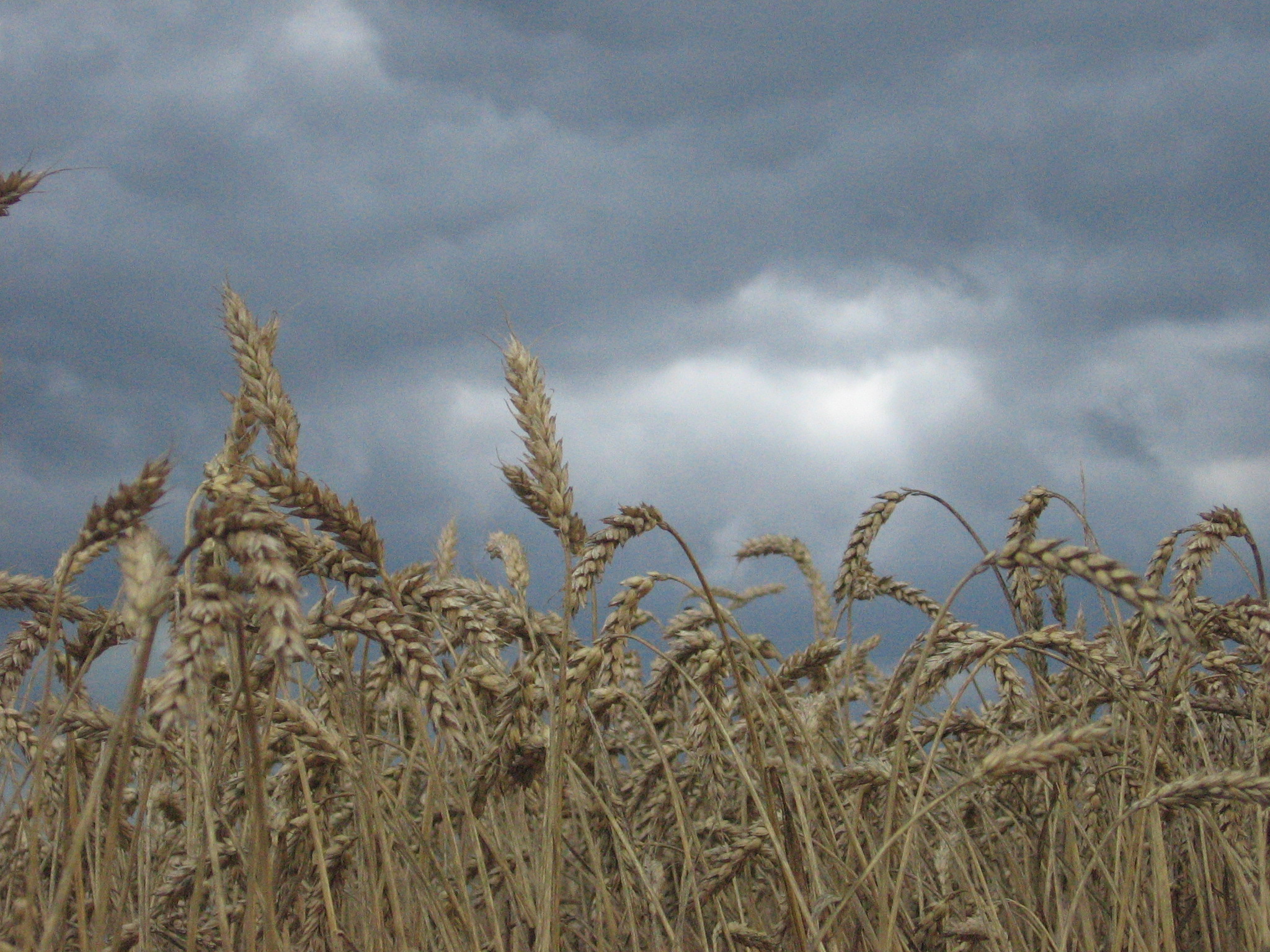
Mature wheatSmall grains are maturing rapidly and soybean planting will soon follow.  While there is little benefit to having more than 70 to 80 thousand uniformly-spaced soybean plants per acre when planted in May, more plants will be needed to maximize yield potential as planting date is delayed later into June.  My general seeding rate recommendations (seed per foot, depending on row spacing) are listed in the table below.  Suggested Soybean Seeding Rate TableNote that I give a range for full-season, double-crop after barley, and double-crop after wheat.  The range represents how the optimal seeding rate will vary depending on yield potential (determined largely by soil type and weather), planting date, and uniform spacing.  With soybean, greater yield potential usually means that lower seeding rates can be used (opposite from corn).  This basically reflects the capacity of the soil to produce more-than-adequate leaf area to fill in relatively wide spacing and/or gaps between plants within a row.  If it’s a productive soil (good plant-available water-holding capacity and good fertility), early plant growth will generally be greater due to lack of stress.  In contrast, if the soil is not as productive, stress may prevent soybean from filling in gaps within and between rows as quickly; therefore, more plants per acre are needed.

Secondly, as planting is delayed, greater seeding rates are needed to make up for the lost time.  Although this is not a big factor until the second or third week of June, yield falls rapidly afterwards, on average about 1/2 bushel per acre per day delay in planting.  More seed per acre will make up for much of this yield loss.

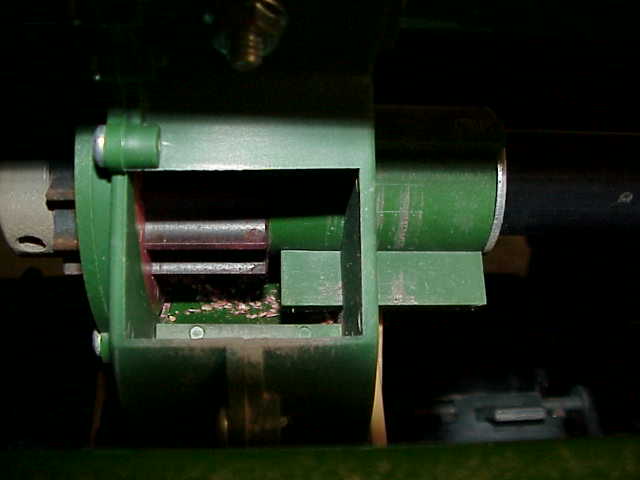
Finally, note that I stated “uniformly-spaced” plants.  Many drills are just pushing seed out a small opening GP1200 Drill Seed Feed Back View Closeand this seed then bounces to and fro within a long tube (this is sometimes referred to as a “controlled spill”).  Without a metering system near the disk opener, this will result in a stand that is far from being uniform – it’s over-planted in some areas, it’s under-planted in others).  Therefore, I lean towards the higher seeding rates with planted with a drill that does not meter the seed.
So, where are we today?  I lean towards planting around 150 to 180 thousand seed per acre (to give 120 to 140 thousand plants per acre).  You should begin to slowly bump up that seeding rate as we near the end of June.  We have conducted numerous double-crop soybean experiments over the years.  Our data indicate that, in most cases, we need 180,000 plants per acre by the end of June in order to maximize our yield.

Although these seeding rate recommendations are based on lots of data, only the growing season will determine if we chose the correct rate.  If we have plenty of sun and rain, little to no plant stress, and excellent early-season vegetative growth, these seeding rates will be too high.  But if the opposite occurs, we’ll need all the plants that we can fit into a field.

2015 Virginia Barley Yield Contest now OPEN!

2015 Virginia Barley Yield Contest now OPEN!

The 2015 Virginia Barley Yield Contest is open for entries.  The contest is conducted by the Virginia Grain Producers Association and Virginia Cooperative Extension.  Prizes are sponsored by the Virginia Crop Improvement Association.  All entrants must be members of the Virginia Grain Producers Association.

Contest rules and entry form can be found here:

http://www.grains.cses.vt.edu/links/Yield_contest/2015%20barley%20yield%20contest%20rules.docx

or:

www.grains.cses.vt.edu

Reminder: Virginia Tech Tidewater AREC “Early Summer Row Crops Tour” to be held on June 4, 2015

Please click on the attached pdf document at the end of this paragraph to see the tri-fold brochure listing details for the  “Early Summer Row Crops Tour” to be held at the Virginia Tech Tidewater AREC Hare Road Research Farm on the morning of June 4, 2015.  All interested in commercial production of field crops are invited to attend. There is no preregistration and no fee for attending this tour. Arrival is at 8:30 am with the program starting promptly at 9:00 am and running through lunch (courtesy of Berry Lewis with Bayer CropScience). More information is available through local Virginia Cooperative Extension offices or by contacting the Tidewater AREC main office at 757-657-6450. If you are a person with a disability and desire any assistive devices, services or other accommodations to participate in this activity, please contact Tidewater AREC at 757-657-6450 (TDD number is 800-828-1120) during business hours of 8:00 am and 4:30 pm to discuss accommodations five days prior to the event. brochure_2015

The Peanut-Cotton Infonet has moved

InfoNetMap

The Virginia Tech Tidewater AREC (TAREC) maintains the Peanut-Cotton Infonet which provides growers in the region with daily weather data (e.g. temperature, rainfall), peanut leaf spot and Sclerotinia advisories, peanut heat units, cotton degree days, and a frost advisory. Four weather stations located in Suffolk, Capron, Skippers, and Waverly are maintained by the TAREC Plant Pathology program. These weather stations transmit data to a computer at the Tidewater AREC, and the data is used to run fungicide advisory models. Data are available on the Virginia Peanut-Cotton Infonet website (http://webipm.ento.vt.edu/cgi-bin/infonet1.cgi).

The data and information available here include:

Maximum, minimum, and average air temperatures
Average soil temperature at a 4 inch depth
Daily and accumulated (from May 1) peanut heat units
Daily and accumulated (from May 1) cotton degree-days
Daily and total seasonal (from May 1) rainfall
Last effective spray date for peanut leaf spot
Sclerotinia blight risk
Frost advisory (from September 25th to completion of harvest)

Virginia Peanut-Cotton Infonet Update

The Virginia Tech Tidewater AREC (TAREC) maintains the Peanut-Cotton Infonet website (webipm.ento.vt.edu/infonet/) which provides growers in southeast Virginia with daily weather data (e.g. air and soil temperatures, rainfall, relative humidity), peanut leaf spot and Sclerotinia advisories, peanut heat units, cotton degree days, and a frost advisory. Four weather stations located in Suffolk, Capron, Skippers, and Waverly are maintained by the TAREC Plant Pathology program. Thanks to funding from the Virginia Peanut and Cotton Boards, we have been able to upgrade our equipment which should improve the overall reliability and consistency of data transfer from our weather stations. The new equipment has been installed and we are receiving data, but we are temporarily unable to post the data to the Infonet website. This technical issue should be resolved by next week, but in the meantime daily weather data will be sent out as an email to extension agents and posted to the Virginia Ag Pest Advisory Blog. We apologize for the inconvenience, and we are working hard to get the Peanut-Cotton Infonet website up and running for the season. If you have any questions or concerns feel free to call the TAREC Plant Pathology lab at (757) 657-6450 ext. 428 or email Dr. Hillary Mehl (hlmehl@vt.edu).

Please find below the current weather data for Suffolk, Capron, and Skippers. The Waverly data will be available shortly.

SE VA Weather Data 5-1-15


Be prepared for scab in small grains

Wheat in the southeastern portions of Virginia will start flowering soon if it has not already. Wheat is susceptible to scab (Fusarium head blight) from early flowering until approximately 10 days after first flower. An online scab risk assessment tool (www.wheatscab.psu.edu) provides information on relative risk of wheat infection by the scab fungus which also has the potential to contaminate grain with DON (vomitoxin). The risk model is based primarily on relative humidity during the 15 days prior to flowering since high moisture favors inoculum production by the scab fungus on crop residues. However, the model also takes into consideration variety resistance to scab. No wheat varieties have complete resistance (immunity) to scab, but commercially available varieties vary in their susceptibility. Current variety rankings for scab resistance can be found here:

Wheat variety rankings for scab resistance

If you do not know the relative susceptibility/resistance of your variety, it is probably best to err on the side of caution and assume that your wheat crop is susceptible or at least moderately susceptible to scab. Currently, the predicted scab risk for wheat that is flowering in Virginia is low for all but the most susceptible varieties. Dry weather is predicted after the current storm passes through, so scab risk will likely remain low to moderate over the next week. However, it is prudent to be prepared to apply a fungicide for scab management as the wheat crop approaches the flowering growth stage. Keep in mind the best management tactic for minimizing yield and quality losses to scab and DON is to plant resistant varieties and to make a properly timed fungicide application when wheat is in the susceptible growth stage (flowering) and weather conditions favor dispersal of the scab fungus.

If a fungicide is applied for scab, strobilurins should NOT be used as they may increase DON (vomitoxin) contamination of the grain if applied after flag leaf. Foliar diseases are starting to increase in some fields in Virginia, but if the wheat is at or near flowering, a strobilurin or premix fungicide containing a strobilurin is not recommended. Fungicides recommended for scab also provide very good to excellent control of common foliar diseases of wheat (see last week’s post), so a scab fungicide application may provide the added benefit of controlling leaf spots and rusts. The triazole fungicides Prosaro, Proline, and Caramba are the most effective fungicides for scab and should be applied at early to mid-flowering and up to one week later. For maximum efficacy, fungicides for scab and DON control should be applied with nozzles angled at a 30 degree angle from the horizontal using both front and back facing nozzles. This will ensure that the product is applied to the grain head rather than the leaves or the ground.

Growers, agents, and consultants can subscribe to the U.S. Wheat & Barley Scab Initiative’s (USWBSI) FHB Alert system at http://www.scabusa.org/fhb_alerts. Region-specific scab alerts that provide growers with updates during critical times are sent as emails and/or text messages.

Wheat disease update

As the wheat crop approaches flag leaf emergence and heading growth stages, it is time to start thinking about disease management. When conditions are conducive to disease development (e.g. high humidity, warm temperatures) foliar fungicide applications may be necessary to protect wheat yield and quality.

Wheat diseases observed in Virginia so far in 2015 have included viruses (which cannot be managed with fungicides), powdery mildew, and leaf blotch. Disease severity thus far has been relatively low in most areas but an increase in disease can be expected with warm, humid weather. Leaf blotch, for example, has been observed on the lower leaves where it is unlikely to impact yield, but once the flag leaf emerges, this leaf surface, which feeds the developing grain, should be protected from disease if symptoms are observed on the lower leaves and conditions are conducive to disease development. Once heading and flowering occur, the developing grain need to be protected from infection by the Fusarium head blight (scab) fungus if scab risk is high. Factors contributing to scab development and proper timing of fungicides for scab management will be discussed in a later post.

Slide1

Each year plant pathologists from throughout the U.S. update the following wheat fungicide efficacy table based on the most current data. Efficacy ratings for each fungicide listed in the table were determined by field testing the materials over multiple years and locations. Efficacy is based on proper application timing to achieve optimum effectiveness of the fungicide as determined by labeled instructions and overall level of disease in the field at the time of application. Judicious use of an appropriate fungicide for the target disease can protect both yield and quality of the wheat crop.

NCERA-184-Wheat-fungicide-table-2015

Syngenta Pest Patrol Hotline…another good source of information

The Syngenta Pest Patrol Hotline gives retailers, consultants and producers valuable information about local pest spectrums to help customize pest management plans based on real-time advice from experts in their area.

Those who are interested can subscribe to receive regional updates from local experts through text messages. Sign up today for Pest Patrol text alerts, so you know immediately when Dr. Ames Herbert has posted a new update.

How to register for Pest Patrol text message alerts?

  • Step one: Register online at www.syngentapestpatrol.com or register via text message by texting “pestpat8” to 97063.
  • Step two: reply to the confirmation text by texting the letter “y”, to complete registration.

Upon receiving an initial text message from Syngenta, the cell phone user is agreeing to receive future text message communications from Syngenta under the Pest Patrol campaign.  Standard text message rates apply and are the sole responsibility of the cell phone user.  To stop receiving messages, the cell phone user must reply to a Syngenta text message with the message ‘STOP’.