Sudden Death Syndrome and Brown Stem Rot Showing Up in Virginia Soybeans (David Holshouser & Hillary Mehl)

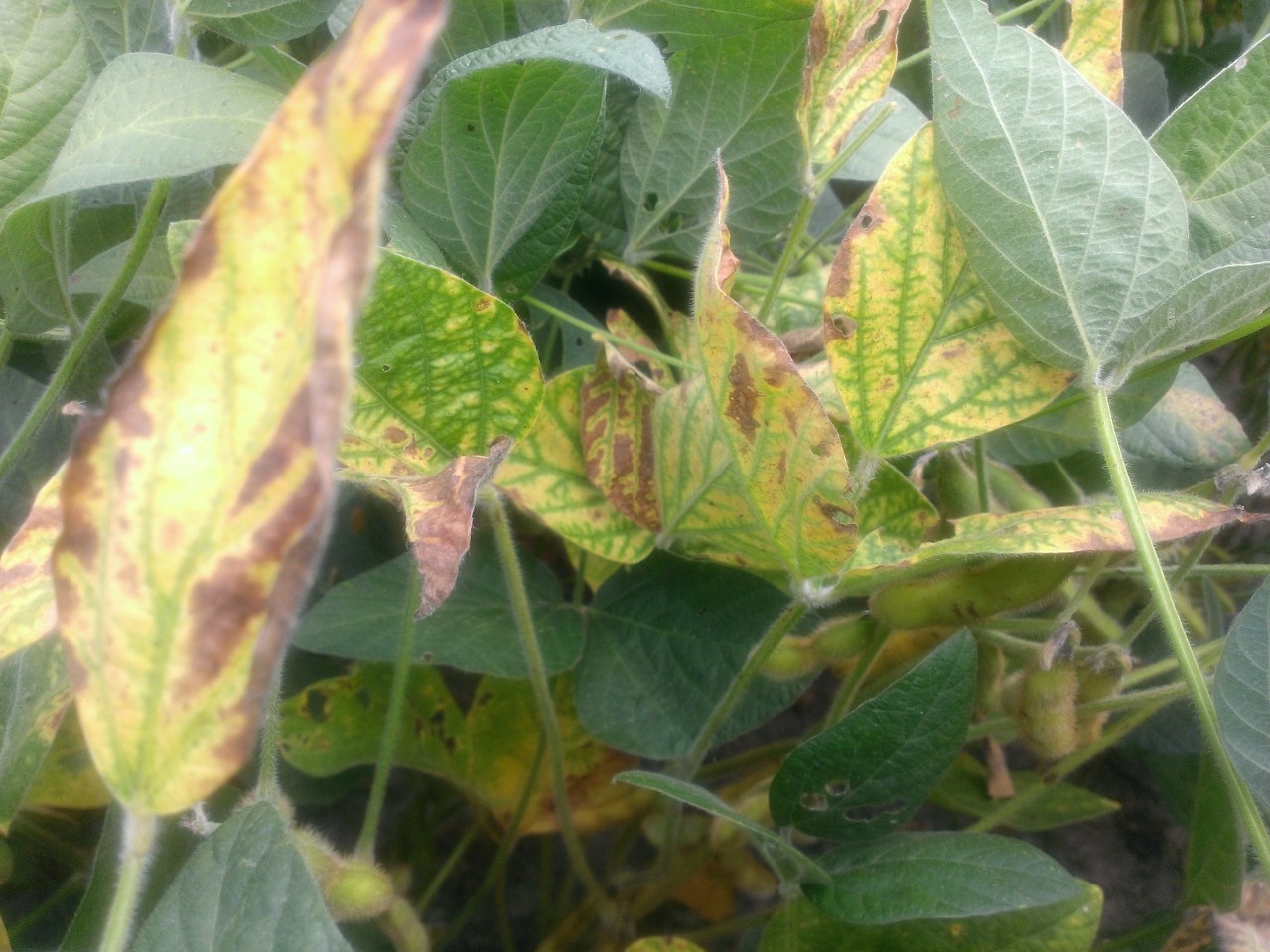
Many fields are exhibiting symptoms of interveinal chlorosis and necrosis. In the some areas (hot spots), leaves are burning up and dying. In the worse fields, entire plants are dying. Sometimes the leaves are falling off the petiole; in other cases, the leaves remain attached. The symptoms look similar to, but usually worse than, various nutrient deficiencies. Actually, what is occurring is very similar to a nutrient deficiency in that something is restricting the roots and/or vascular system from moving water and nutrients through the plants.  If you start seeing such symptoms, dig some roots and examine them. Then, split the stem and tap root. If you see any discoloring, then you likely have a stem/root disease.

Is this sudden death syndrome (SDS)? Maybe. We tend to hear a lot about this disease in the media, in a seed catalog ratings, and throughout many extension bulletins in the Midwest. Although the name makes the disease sound like the entire field is getting ready to die, this is not usually the case. Up until this year, SDS was neither devastating nor widespread in Virginia. However, we are seeing more than the usual cases this year.
SDS in Virginia Soybean

SDS in Virginia Soybean

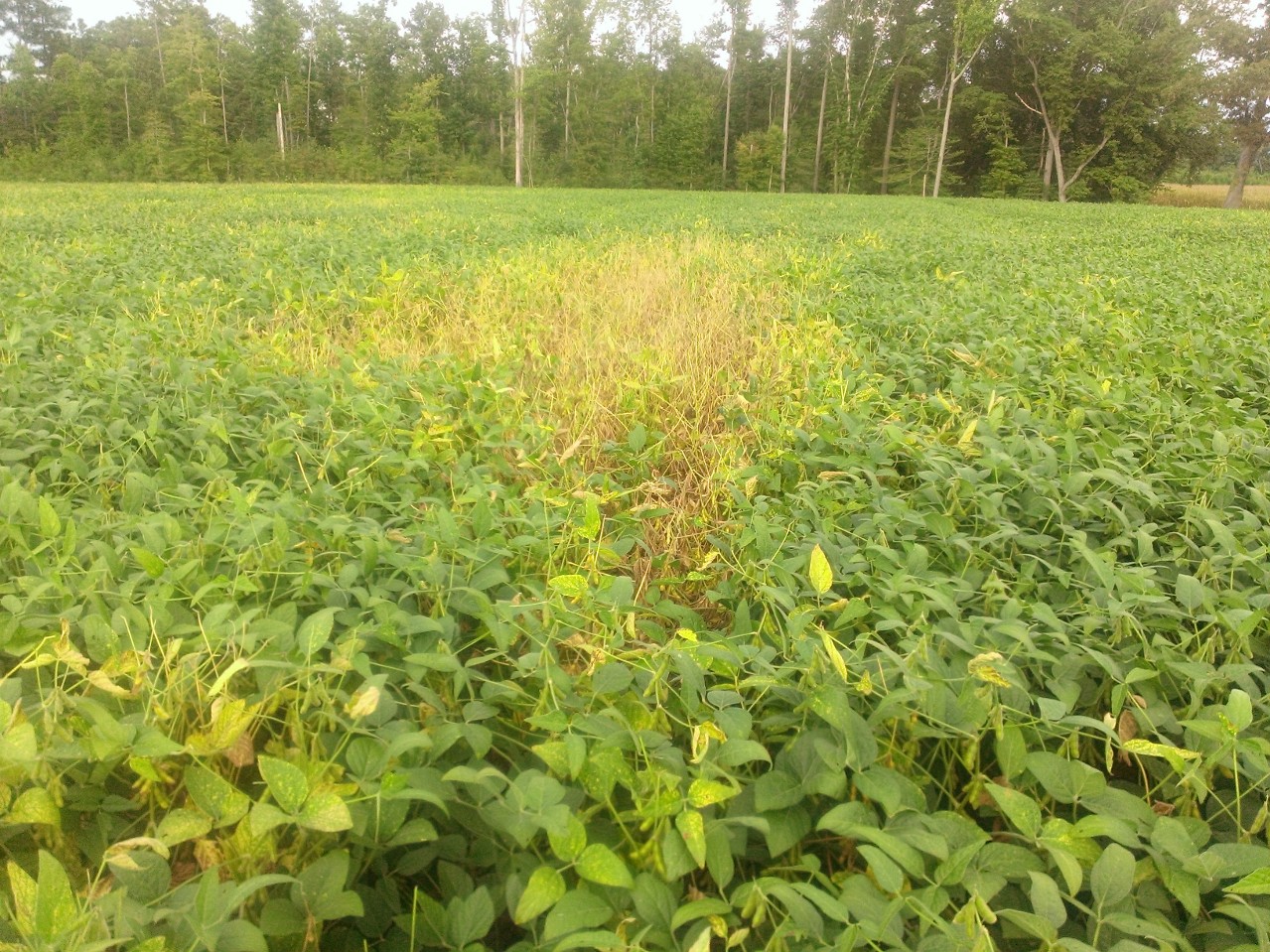
It appears that the disease spreads suddenly; you don’t see it one week, but the parts of the field begin dying the next. In reality, it has been building up slowly as the season progresses. The infection actually took place much earlier in the year. Regardless, SDS will rarely result in widespread death of the soybean crop. Instead, you will usually see it in spots and patches in the field. Worth noting is that SDS is commonly associated with soybean cyst nematode infestations. So, if your field has been diagnosed with SDS, then you may want to sample for nematodes. Below is a photo of one of our on-farm soybean variety tests. It is one of the worst cases of SDS that I have ever seen. Although a few varieties are more tolerant to the disease than others, it appeared to affect all of the varieties to some extent.
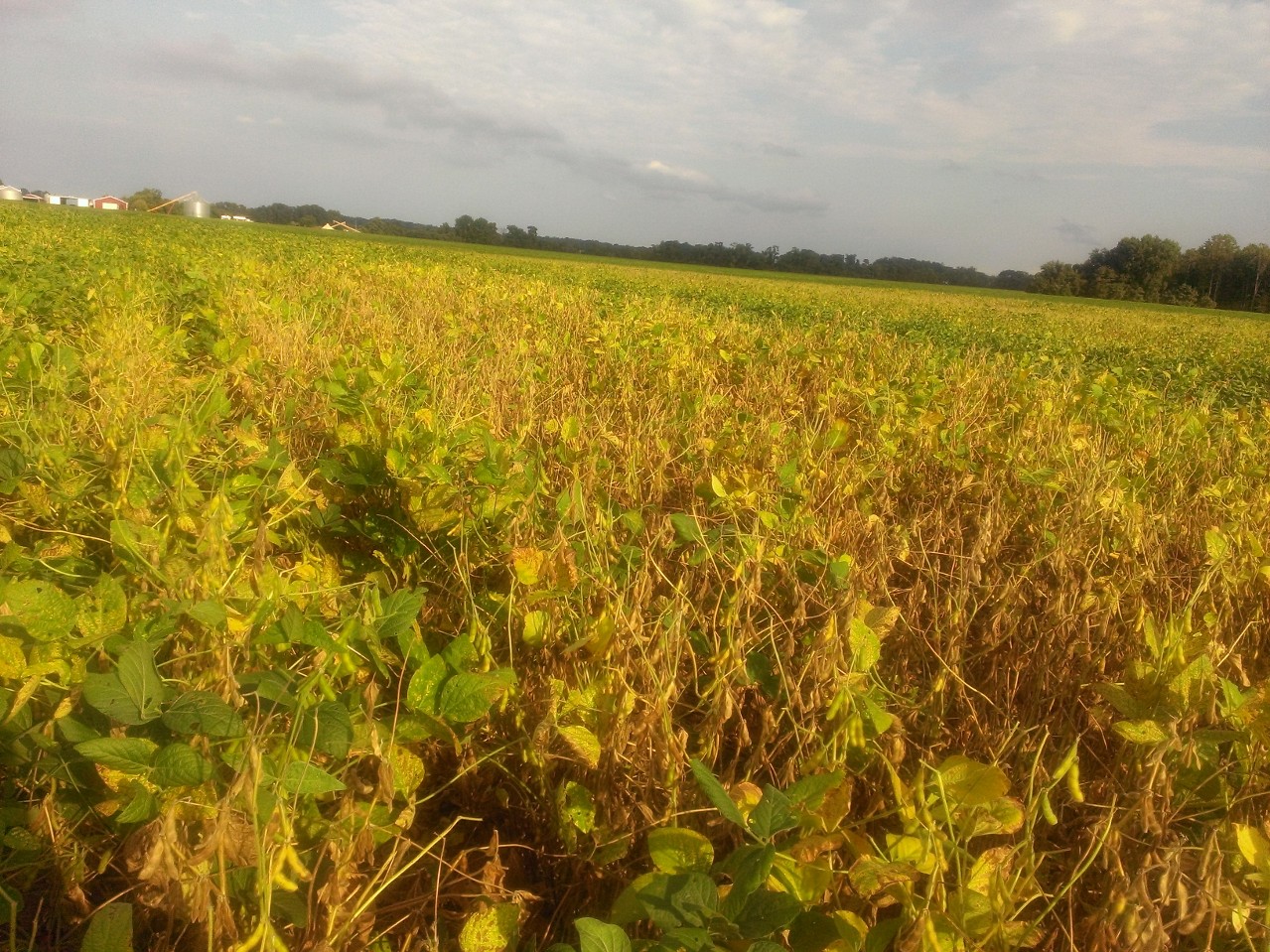
SDS in On-Farm Variety Test in Virginia

SDS in On-Farm Variety Test in Virginia

Although SDS is turning up in several fields this year, the same above-ground symptoms are also association with brown stem rot (BSR), which has been the most common root/stem disease in Virginia. Some of the plant samples that have come through our plant pathology lab have been diagnosed as BSR. It usually doesn’t cause widespread death and it usually limited to small spots or patches in the field. In general, it will not continue to spread over the rest of the field; however, the patches will enlarge over time. Yield loss is usually minimum and restricted to the infected areas.
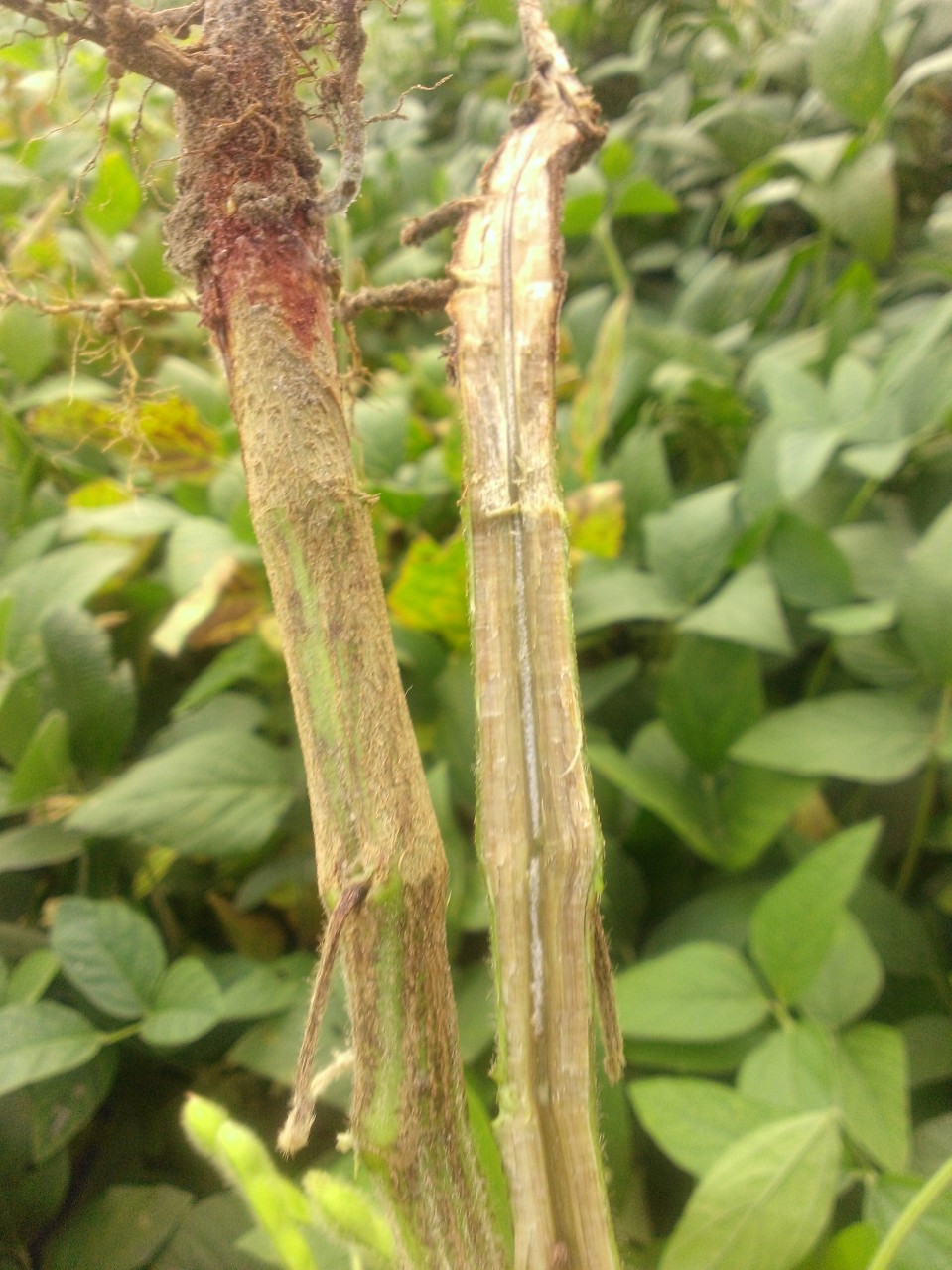
SDS Symptoms in Soybean Stem

SDS Symptoms in Soybean Stem

As mentioned earlier, if plants begin suddenly showing above-ground symptoms, dig the roots and split some stems.  If the pith (center) of the stem and taproot right at the soil level is brown, then the cause is likely (but not always) BSR. If you see a white pith and the rest of the root is brown, then the disease could be SDS. Another diagnostic tool is to look at the leaves. If the leaflets fall off but leave the petiole attached to the stem, it is likely SDS. if the leaves don’t fall, it’s likely BSR. Finally, you’ll seed more rotted roots with SDS. But, to find the rotted roots, you’ll need to dig them up and wash the soil from the roots. Jerking the plant out of the ground will likely strip off most of the roots.

The last disease that could be a problem and exhibit the same symptoms is red crown rot (in peanut, this is called cylindrocladium black rot or CBR). This disease can however be recognized by red fruiting bodies found at the base of the stem. Red crown rot was more common when Virginia’s peanut acreage was greater and soybean and peanut were being rotated with each other.
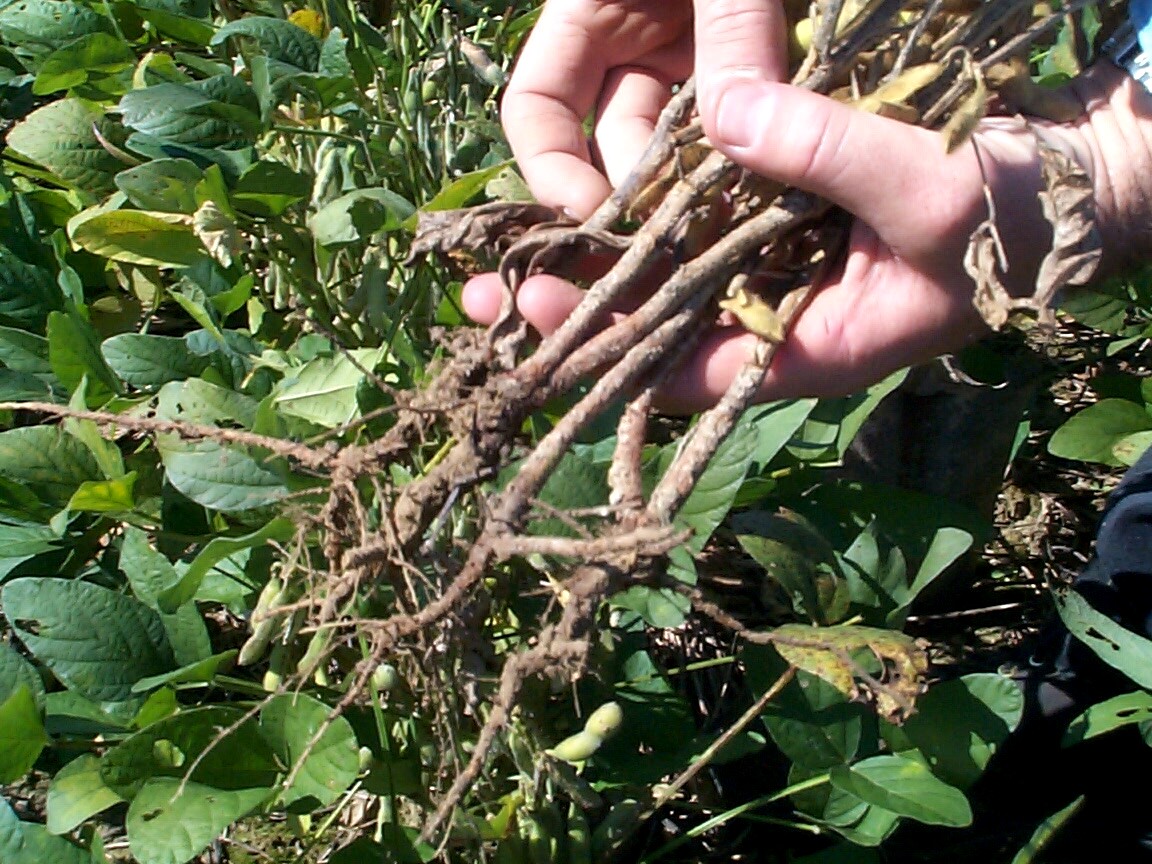
Red Crown Rot in Soybean

Red Crown Rot in Soybean

Regardless of the disease, what can you do about it? Unfortunately, there is nothing that can be done this year. Foliar fungicides will not control a disease that is inside the stem and roots. But, in the future, rotate out of soybean for one or more years. Also, you may want to select a variety with resistance to that disease when you plant soybean in the field. Finally, as mentioned earlier, take a nematode sample. Just because you’re seeing SDS or BSR in your field this year doesn’t mean that you have nematodes. But anything that is restricting root growth could aggravate SDS or BSR; therefore the symptoms would be more evident in fields infested with nematodes.
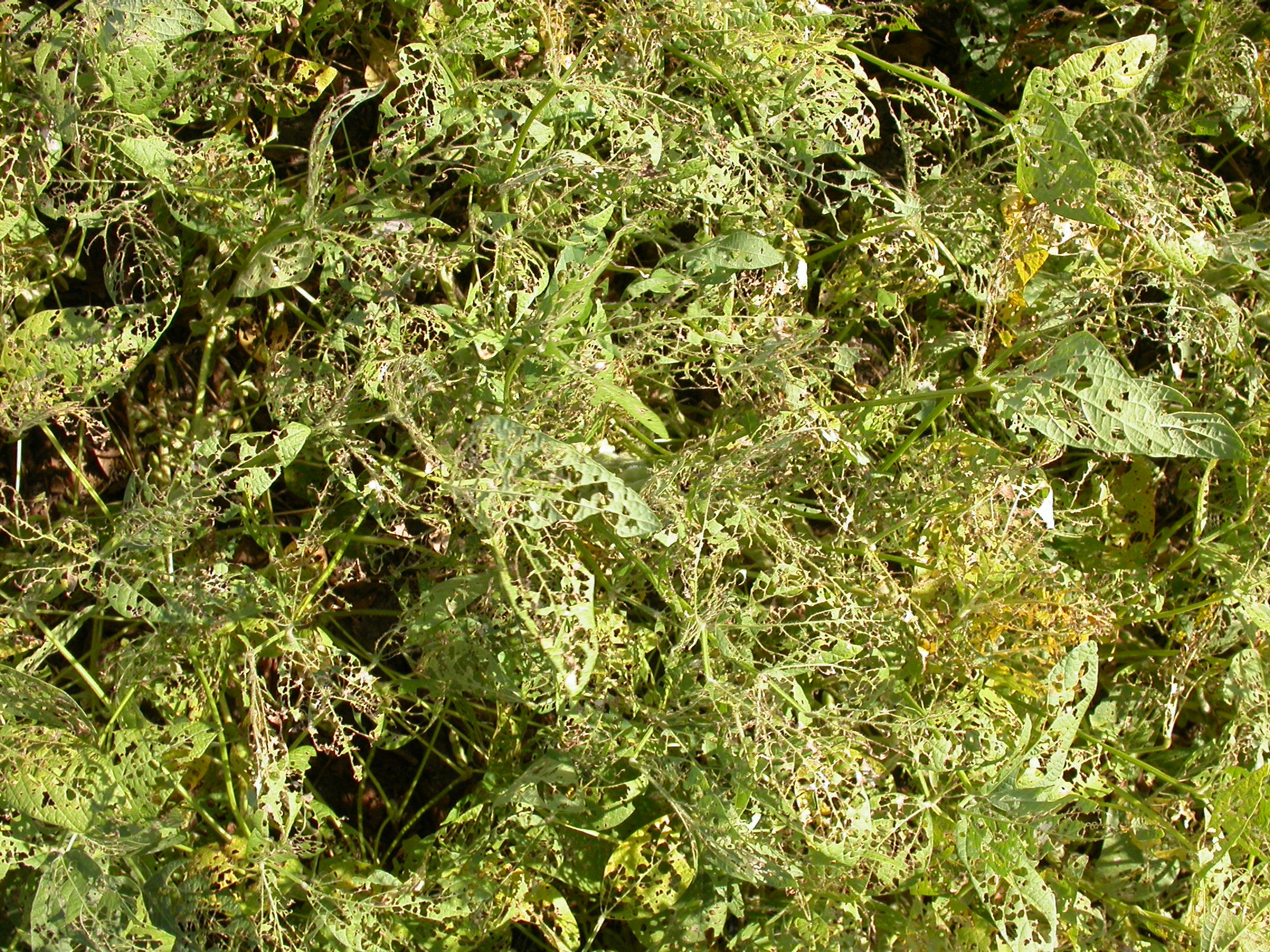
SOYBEAN LOOPER ALERT

Soybeans in parts of North Carolina, especially in their eastern ‘Blacklands’, have been plagued by soybean looper infestations for a few weeks.  I got the first report of infestations on our Eastern Shore earlier this week, and today, I got a report of a field hit in Southampton County.

Soybean loopers follow a pattern that we have seen in the past.  They do not overwinter in Virginia so moths must migrate in from the south. Adult moths are transported short or long distances by weather fronts.  It is not uncommon to find a few soybean loopers in any given field, any time during the season.  But it is fairly uncommon to have large flights.  The pattern that I have seen, and the one that is playing out this year is that when large populations build up to our south, moths are transported to our area in large numbers—and—most commonly in mid-September.

Another important factor to be aware of is that almost invariably, these large flights result in large worm outbreaks IN FIELDS THAT HAVE BEEN PREVIOUSLY TREATED WITH PYRETHROIDS.  Our current research is showing that pyrethroids are hard on beneficial insects and spiders that feed on looper eggs and small worms.  If destroyed, a much larger percentage of looper eggs hatch and a larger percentage of worms survive.

So, if a looper infestation is discovered in a field, what is the threshold and what products provide the best control.  We do not have a threshold for loopers but lump them into a general leaf defoliators ‘guild’ which can include many leaf eaters (Japanese beetles, green cloverworms, grasshoppers, bean leaf beetles and others)—and base a treatment decision on the total leaf area destroyed by the guild. We recommend not treating fields with fully developed seed unless 35-40% of the leaf area is eaten and bugs are still present.

We also know that soybean looper is a unique pest in that large numbers can completely defoliate a field in a short period of time, in as few as 5-7 days if numbers are really high.  So here is a looper rule-of-thumb.  Treat if you get 12-15 or more in 15 sweeps and the field has not reached full pod maturity (pods yellowing and seed getting hard).

Do not use a pyrethroid for loopers.  These critters are hard to kill and the best success will be with non-pyrethroids like Belt at 3 oz, Prevathon at 14 oz, or Besiege at 10 oz.  Other products that contain sinosad may also be effective.

Defoliation by soybean loopers

Now is a Good Time to Evaluate Your Varieties for Foliar Diseases

September is a great time to evaluate your crop and the performance of varieties that you chose. In addition to general growth and health of the crop, take some time to determine if you have any of the below diseases. If so, you could be losing some yield. If you sprayed with a fungicide and still have disease, reconsider the product and rate used and the time that the fungicide was applied. Keep in mind the weather conditions when the application was made and the conditions 2 to 3 weeks after or before the product was applied. Cool temperatures (70’s) and high relative humidity (>95% for 12 hours or more) will usually increase disease incidence.

Another caution is to never diagnose a specific disease on the plant without verifying it with a person trained to identify plant pathogens. Only when the reproductive structures are found on the leaf can a disease be confirmed. Many things will cause look-alike symptoms. Be sure before you cast the blame. There are more diseases than just the ones shown below, but these are the most common. Brown spot is normally found in the lower part of the crop canopy (the lower leaves), Cercospora blight and leaf spot will be found throughout the canopy, and the frogeye leaf spot and downy mildew tend to be found in the upper part of the canopy.Foliar-Diseases-in-Soybean

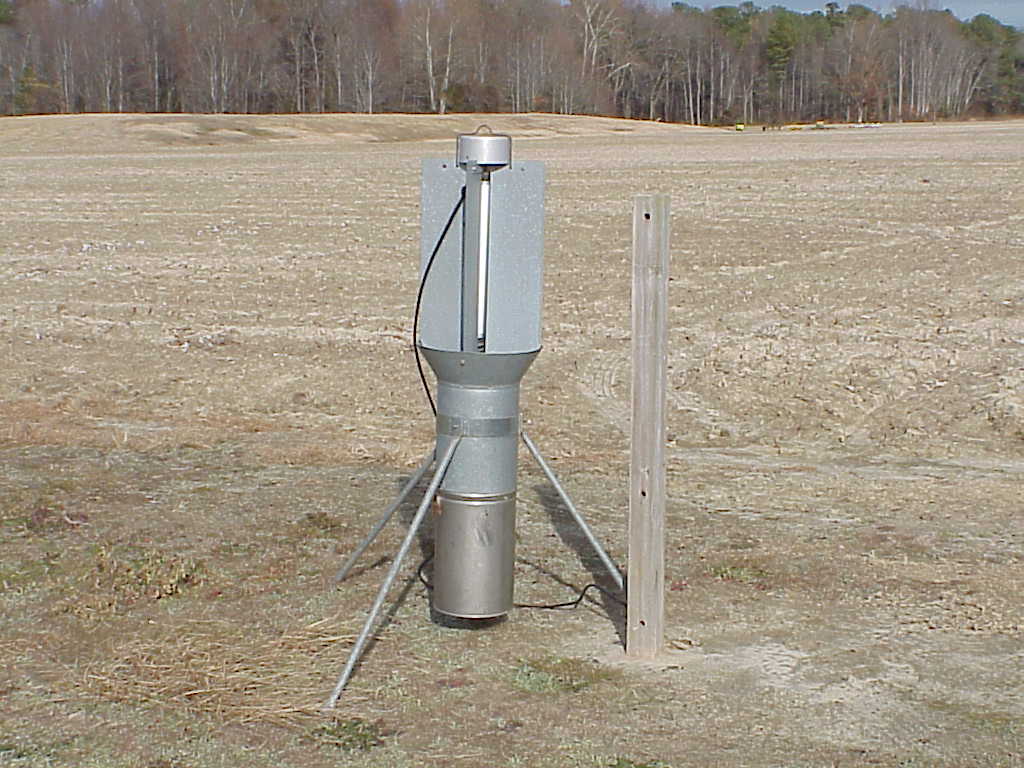
Corn earworm and BMSB black light trap catches for the week ending Sep. 4, 2014

Please click on the attached pdf document (BLT_4_Sep_2014) for tables containing the weekly corn earworm moth and brown marmorated stink bug black light trap catches.  Thanks to the following for their reports this week:  John Allison, Scott Reiter (Scott also found BMSB in Prince George soybean), David Moore, Mark Kraemer, Mike Parrish, and Ames Herbert and his entomology team.  BLT_4_Sep_2014

Corn Earworm Update, Sept. 4, 2014

Corn earworm moth activity has increased a lot here at TAREC in the last week.  We are finally seeing what may be the largest flight of the summer.  In spot checking fields, we are finding worms in some, mostly only in the late planted fields that are still flowering.  I get a lot of feedback from growers and others that are checking fields and so far, most have reported almost no worms.  A few fields have hit threshold and were treated.  With this increased moth activity, it is important to focus scouting efforts on fields that still have susceptible pods—seed filling in the pods.  Full season fields that have full pods that are beginning to yellow will not be attractive to late season corn earworm, or stink bug infestations.  Keep checking late planted fields for at least another 3 weeks.

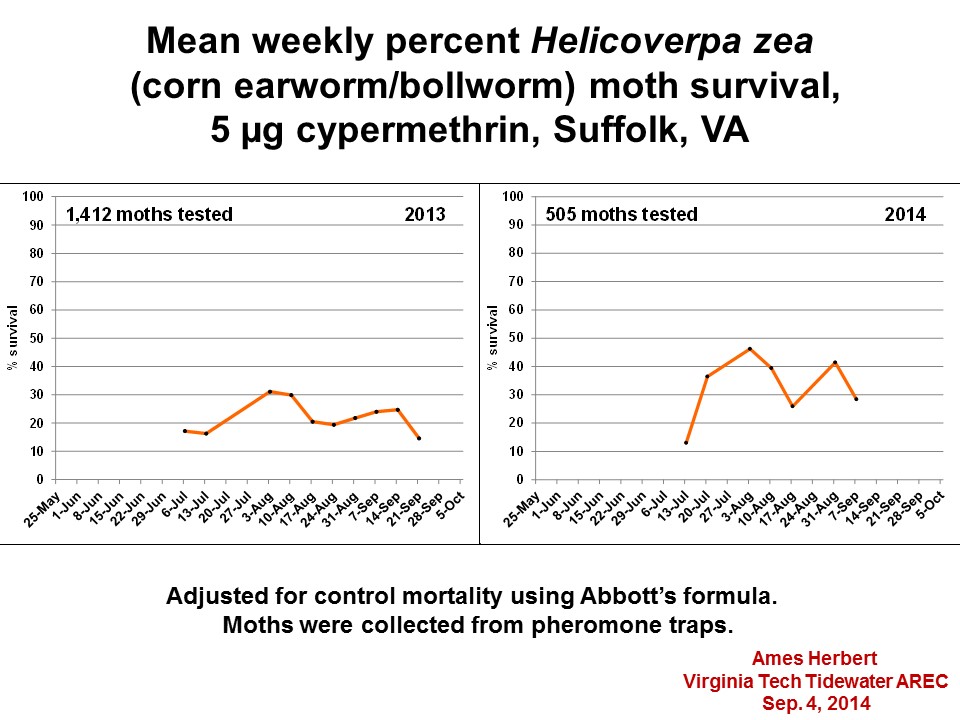
The number of moths surviving the pyrethroid AVT (Adult Vial Test) is hanging at about 30-40 percent.  These are not extreme numbers, but do still indicate some issue with those products.  I still think you can probably get by with a high pyrethroid rate if a field is only at threshold or a little above.  If a heavy infestation is found, definitely tank mix a non-pyrethroid.

Line graphs of cypermethrin vial testing (resistance monitoring) of Helicoverpa zea moths, updated on September 4, 2014

BMSB and Kudzu Bug Update, Sept. 4, 2014

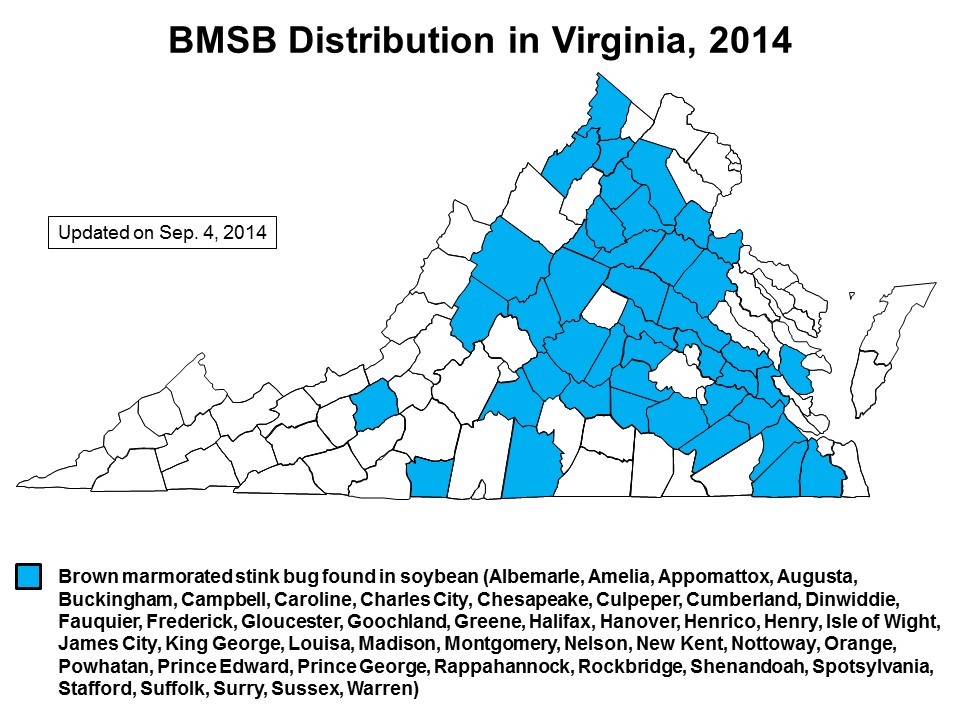
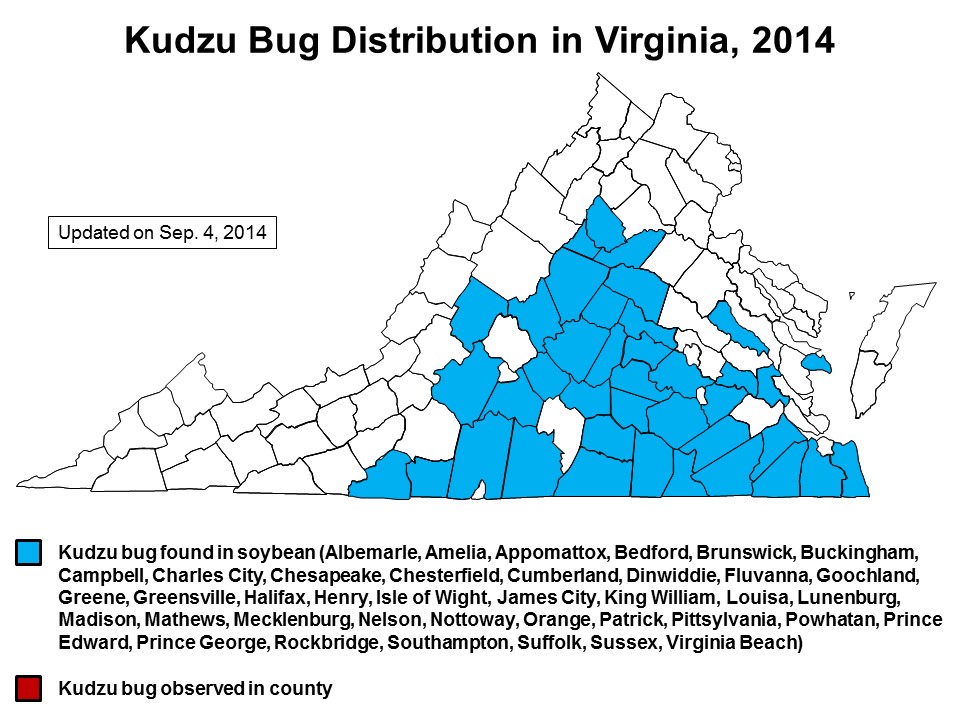
Although numbers are still generally very low, our field scouts and others have found BMSB and kudzu bug in a few new counties this past week.  The eight new counties added for BMSB are Gloucester, Charles City, Hanover, Spotsylvania, Rappahannock, Prince George, Suffolk and Chesapeake (thanks Stan Winslow for the Chesapeake report).  The two new kudzu bug counties are James City and King William (thanks Paul Bodenstine for the King William report).  See the maps below for the most recent distributions. Although there may have been a few fields treated for these pests, as far as I can determine most have not. We know of one grower in Campbell County who had some threshold numbers but only in a few patches along one field edge.  He elected to spot treat only these patches and so far, our post treatment visits have shown that this strategy was successful, that is, no reinfestation and no spread.

Distribution map of brown marmorated stink bug in Virginia soybean, updated on Sep. 4, 2014 Distribution map of kudzu bug in Virginia, updated on September 4, 2014

Peanut Crop Update for Virginia

Maturity wise, seasonal heat units accumulated by peanut fields from May 1st to Sep 1st in Virginia are between 2252 to 2376 °F. Therefore, we started a weekly pod maturity determination by the pod mesocarp color of Williams and Drexler (1981). We grouped the pods on a maturity board into white, yellow, orange, brown, and black color groups. The profile maturity classes defines white and yellow as immature, and orange, brown and black as mature pods; orange is defined as incipient maturity, brown full maturity, and black over mature pods. We used Bailey planted on May 5th and May 20th, and CHAMPS planted on May 27. Both Bailey and CHAMPS mature in approximately 145 days after planting or 2600 heat units. Peanut maturity determined on Sep 2nd

Our data indicate that in Virginia all plantings have the majority of the pods, 75 % to 91%, in the yellow and orange color groups (yellow predominates) with more spread for early May plantings (12% were in the white and 13% the brown group) and more uniform pods for late May planting (only 9% were a combination of white and brown).

Appearance wise, peanut vines start showing drought symptoms due to current high temperatures and absence of rainfall in many fields in Virginia. As of now, we are looking at 30 to 40 days to optimum maturity but more delay is expected if no significant rainfall will be soon received and in absence of irrigation.

Late blight on leaf

Late Blight Found in Floyd County

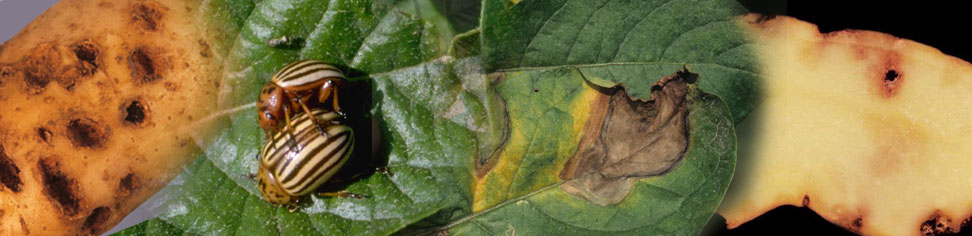
Late blight has been confirmed on tomato in Floyd County, VA, by the Virginia Tech Plant Disease Clinic. Potato and tomato growers should take precautionary actions and increase scouting. Cool and wet conditions favor development of this disease and fungicide sprays should be in place before the disease is present in a field or garden. For more information on late blight and late blight management, refer to the Extension publication available at: http://pubs.ext.vt.edu/ANR/ANR-6/ANR-6_pdf.pdf . Late blight was previously identified in Loudoun County, VA, on July 22; Rappahannock County, VA, on August 8; and Montgomery County, VA on August 20.

Fall armyworm moth counts are unusually high

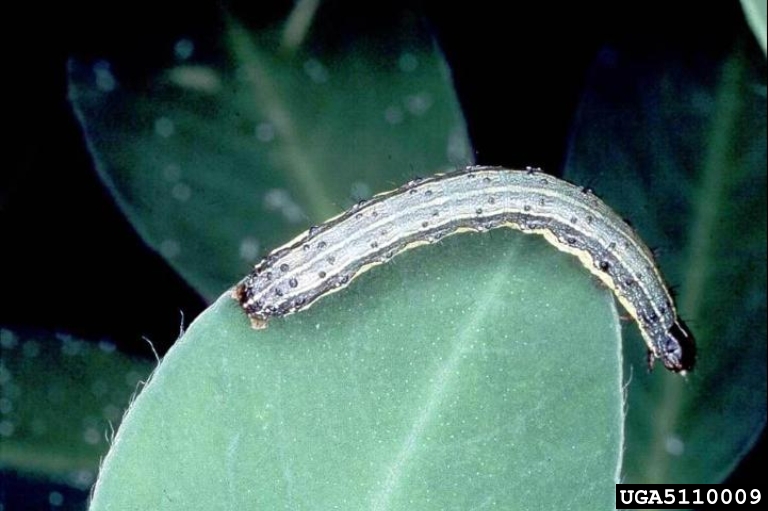
For the past several years we have been using pheromone traps to monitor fall armyworm moth flights at the Tidewater Center.  The numbers we have been catching these past few days are much higher than what we have normally seen.  Fall armyworm has two strains.  They are identical in appearance but one prefers to feed on grasses (the grass strain) and the other prefers to feed on legumes, cotton and other hosts.  We cannot tell which strain we have by looking at the moths, but we do know that fall armyworms can infest peanuts, cotton, sorghum, turfgrass and many other crops.  We have not found any fall armyworms in the peanut fields in the vicinity of the adult traps, but if they are going to occur, we would expect to see them next week.  Moths have to mate, lay eggs on the peanut leaves, and worms hatch from the eggs—typically a 5 to 7 day cycle. In peanuts there would have to be a lot of worms to warrant a treatment.  This late in the season, and with the extensive plant canopies that most peanut fields have, it would take at least 6 worms per row foot to trigger a spray.  It has been many years since we encountered that many worms in a peanut field—but, we strongly suggest that you spot check fields for these critters.