Corn earworm update: few moths but with high tolerance to pyrethroids

Although we hear rumors of worms in soybean fields, our scouting does not confirm this.  We are finding almost none in either full season or double crop fields—and others are reporting the same.  The full season crop is quickly approaching the ‘safe’ zone, that is, the point where pods are too tough to be attractive to insect pests.  But, the summer is not over yet.  Because corn is slow to dry down this year, we may still see a corn earworm moth flight into soybean fields, and if this happens, double crop fields would be a primary target.  This is also true for stink bugs.  As we get into late summer and early fall, stink bugs will be attracted to double crop fields.  We strongly recommend that you begin checking double crop fields.

Because of the very weak corn earworm moth flight, we have not been able to capture and test nearly as many moths for pyrethroid tolerance as we have in the past.  But all indications are that levels are high (see the graph below).  In the most recent sample more than 40% survived the vial challenge.  If this high pyrethroid tolerance level coincided with a large flight the large numbers of worms in fields, we would no question be recommending non-pyrethroids.  But with this weak flight and the low numbers of worms in fields, I think we can get decent enough control with high rates of pyrethroids, alone.
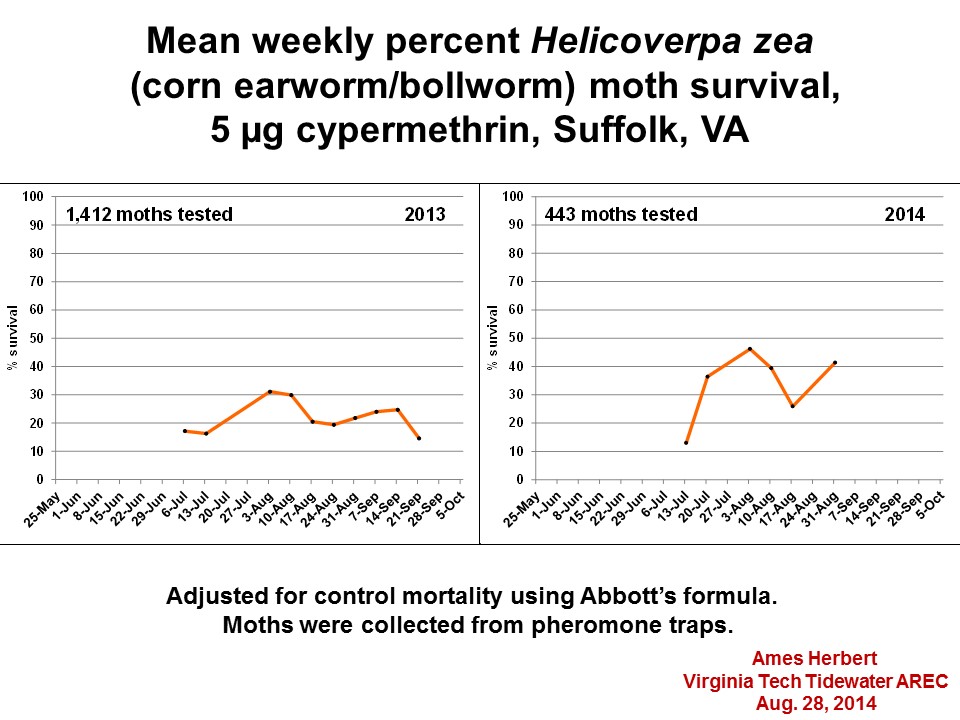
Adult vial test data for corn earworm, Aug. 28, 2014

Reports of worm damage in NC cotton

We are getting reports of bollworm outbreaks and damage in cotton in areas of North Carolina, not far from the Virginia border.  I know of no confirmed cases in Virginia, but fields should be checked over the next week or so.  Although the corn earworm/bollworm moth flight has been extremely weak in Virginia, it may not be over.  Corn is slow to dry down this year and may release another flush of moths. By now, a lot of bolls, the lower and first position bolls, are safe from worms—too tough for them to chew through.  But there are still upper and outer position bolls that are soft and susceptible.  We recommend scouting all fields, as we are hearing that the NC problem is occurring on several different varieties.  3% live worms or fresh worm damage is a good rule-of-thumb threshold.

Sorghum webworm larvae

Worms in Sorghum

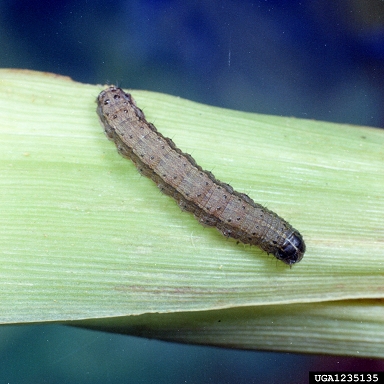
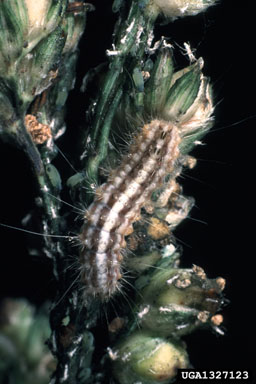
We received a sorghum head sample today from Dinwiddie County with sorghum webworm (see image on right).  This is a known pest of sorghum and we have seen them before, but because of their smaller size compared to other head worm species, the threshold is an average of 5 per head across the field.  To date, we have never seen nearly this many in any field, but this is a pest that should be scouted for.  We are also seeing a very large number of fall armyworm moths in our pheromone traps here at the Tidewater Center.  Fall armyworm is another sorghum head pest (see the image below), along with corn earworm, and the threshold for these species is an average of 2 per head.  We recommend scouting sorghum fields until heads have hardened seeds.  If fall armyworm is found in threshold numbers and a treatment is needed, pyrethroids will not do the job.  The best results will be with non-pyrethroids like Belt, Prevathon or Besiege.

fall armyworm larvae


Brown marmorated stink bug (BMSB) and kudzu bug (KB) in more counties but numbers still very low

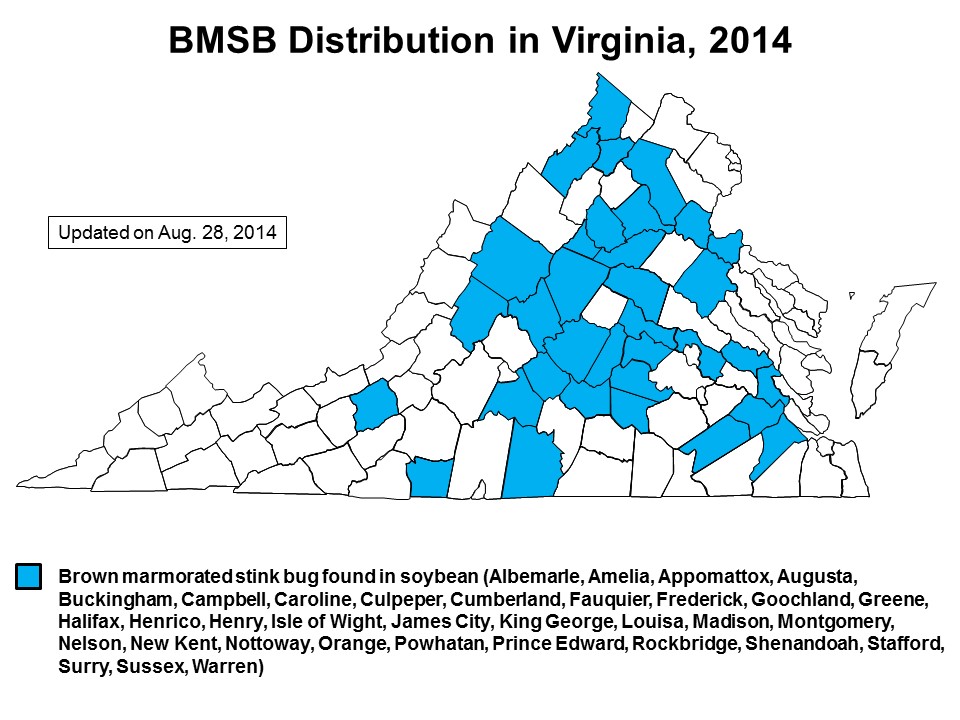
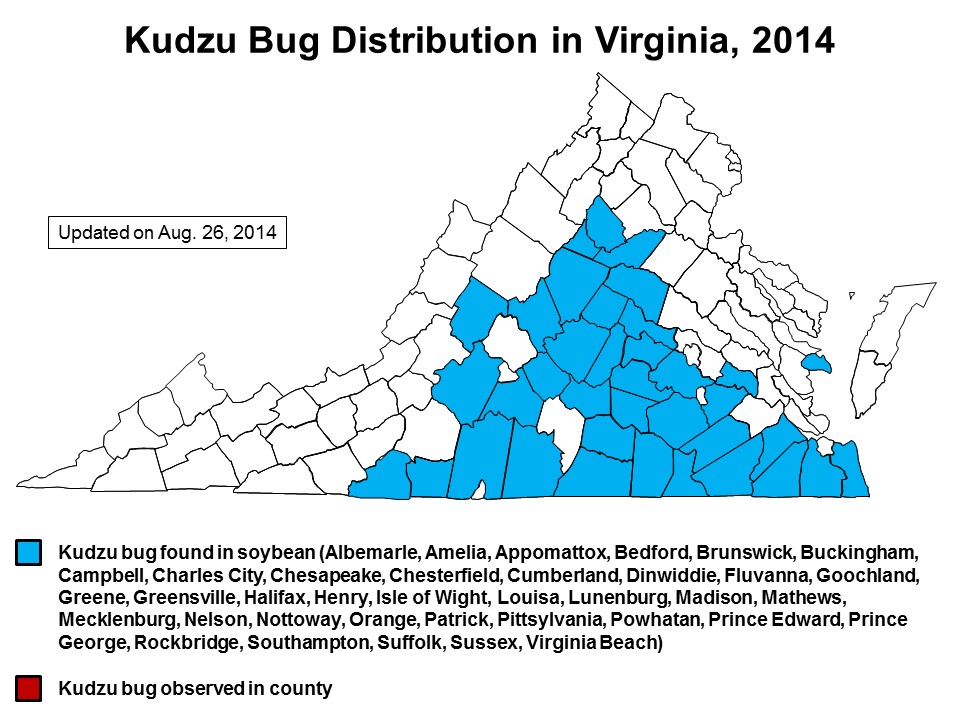
We are still finding BMSB and KB in new places—7 new counties for BMSB (Sussex, Albemarle, Cumberland, New Kent, King George, Isle of Wight, and Surry), and KB in 3 new counties (Mathews, Mecklenburg, and Virginia Beach)—but numbers in all locations are way down compared with last year (see the maps below).  No fields are at threshold for either pest, but a couple of fields were identified in James City County that have some infested edges.  The full season crop is going to be safe from injury soon, when plants grow through the R6 stage.  As the season moves into late summer and early fall, double crop fields will provide one of the few good late season food sources for all stink bug species—so they will need to scouted until they are safe from injury.

Distribution of brown marmorated stink bug in soybean in Virginia counties as of Aug. 28, 2014 Distribution of kudzu bug in Virginia as of Aug. 26, 2014

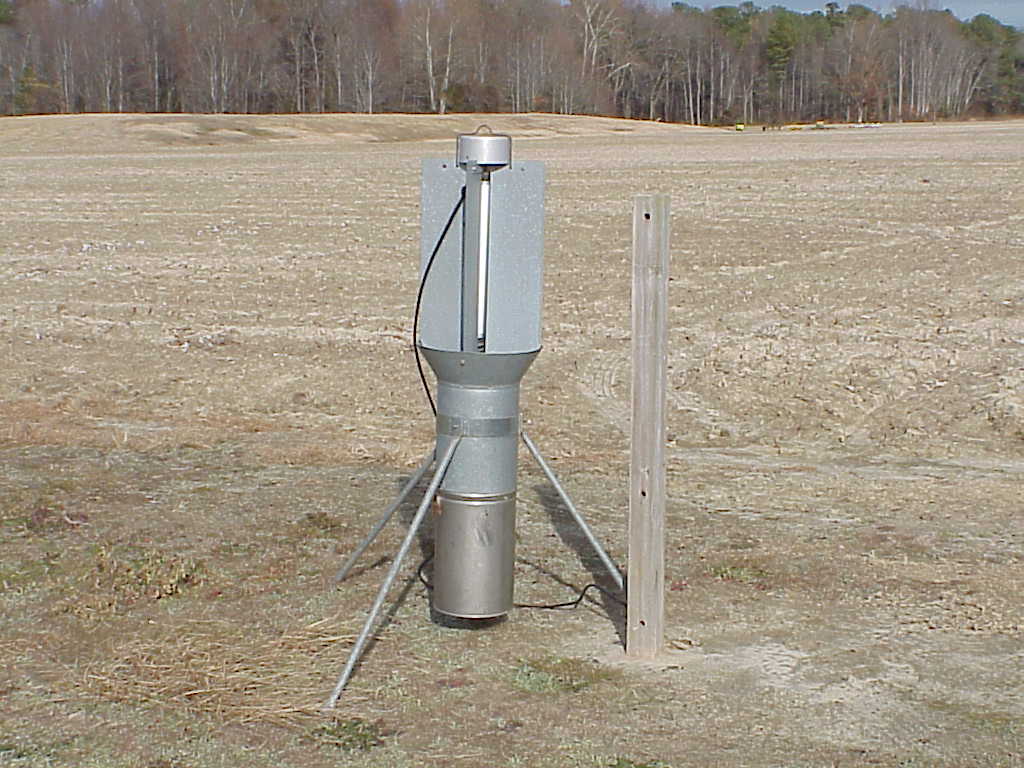
Corn earworm and BMSB black light trap report for the week ending August 28, 2014

Average catches in area black light traps ranged from 1 to 26 Helicoverpa zea (corn earworm/bollworm) moths per night, and zero to < 3 brown marmorated stink bugs per night.  Please click on this pdf file for the full table:  BLT_28_Aug_2014

Thanks to the following for their reports this week:  Bob Pitman, Mary Beahm, David Moore, Chris Drake, Keith Balderson, Mark Kraemer, Kelvin Wells, Scott Reiter, Mike Parrish, and Ames Herbert and his entomology team.


Mysterious leaf spots in peanut

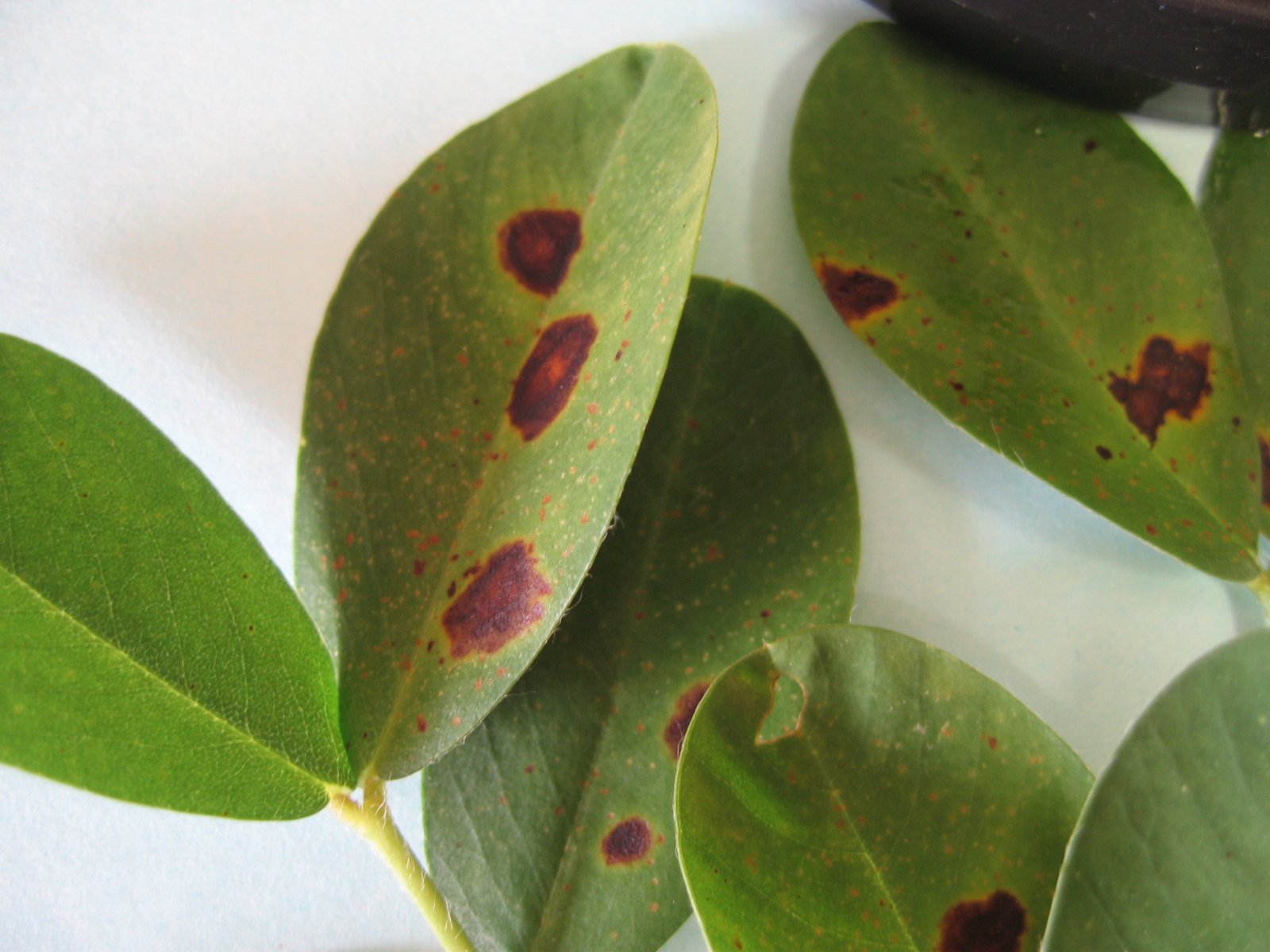
In the past two weeks or so, there were discussions among specialists about peanuts showing a “mysterious leaf spot” of non-pathogenic origin (credit to pathologists Barbara Shew and Hillary Mehl); but the spot is similar in appearance to the early leaf spot when it starts and becomes irregular at later stages.

"Mysterious" leaf spot found in Suffolk, VA. At the initial stage, the spot looks like early leaf spot, but it has non-pathogenic origin.

“Mysterious” leaf spot found in Suffolk, VA. At the initial stage, the spot looks like early leaf spot, but it has non-pathogenic origin.

Dr. Jay Chapin with Clemson University thinks it is a physiological leaf spot; he calls it “irregular leaf spot”. He observed it to be more prevalent on runners, in particular GA09B, and resulting in yield reduction under certain circumstances. Dr. David Jordan calls it “peculiar leaf spot”. I also found it in research peanut fields in Suffolk and Southampton, VA; the spotting was under 25% of the total leaf area. To solve the “mystery” and get information on the frequency of this issue in NC, Dr. Jordan recently launched a survey and asked the Extension Agents to assess the presence and severity of the spot in approximately 20 fields in each county (4 to 5 areas in each field) using the table below. Because I also found the spot in several fields and I know of growers growing GA09B this year, I suggest we do the same in Virginia. Please use the table below; under “comments” please include information on the cultural practices used in each field, if possible, so we can better explain the cause of the spotting. This assessment can be used at winter meetings and presented at the APRES next year together with the NC Extension Agents.

Documentation of Leaf Spots in Peanut that is not early or late leaf spot or web blotch

Field ID (your designation) Spots present (yes/no) Severity (none, low = 25% or less leaflets with spots, moderate = 25 to 50% leaflets with spots, high = 50 to 75% leaflets with spots, very high = 75 to 100% leaflets with spots) relative to entire peanut canopy Comments


Black light trap in field

Black light trap report for the week ending August 21, 2014

This week’s corn earworm moth nightly black light trap counts increased for most reporting stations; brown marmorated stink bug catches tended to be lower this week.  Please click on the pdf file below (BLT_21_Aug_2014) for the data tables.  Thanks to the following for their reports this week:  David Moore, Chris Drake, Watson Lawrence, Mike Parrish, Keith Balderson, Mary Beahm, Mark Kraemer, Scott Reiter, and Ames Herbert and his entomology team.

BLT_21_Aug_2014

Late Blight Found in Montgomery County

Late blight on leaf

Late blight has been confirmed on tomato in Montgomery County, VA, by the Virginia Tech Plant Disease Clinic. Potato and tomato growers should take precautionary actions and increase scouting. Cool and wet conditions favor development of this disease and fungicide sprays should be in place before the disease is present in a field or garden. For more information on late blight and late blight management, refer to the Extension publication available at: http://pubs.ext.vt.edu/ANR/ANR-6/ANR-6_pdf.pdf . Late blight was previously identified in Loudoun County, VA, on July 22 and Rappahannock County, VA, on August 8.

Brown marmorated stink bug distribution in Virginia–August 21, 2014 report

BMSB was found in soybean in nine new Virginia counties this past week:  James City, Caroline, Stafford, Culpeper, Fauquier, Nelson, Rockbridge, Henry, and Montgomery.  The highest numbers of BMSB occurred in a Warren field (5 nymphs and 4 adults per 2-minute visual inspection), followed by Augusta (5 nymphs and 1 adult per 2-minute visual), Fauquier (5 nymphs), Buckingham (4 nymphs), James City (3 nymphs, 1 adult), and Appomattox (3 nymphs, 1 adult).  Thanks to our soybean scouts and to Dr. Tom Kuhar for their updates this week.

Map of Virginia counties where brown marmorated stink bug has been found as of August 19, 2014